The Boss That Ships Broken: Why Launch-Day Difficulty Spikes Are Almost Always a Bug, Not a Feature

When Cyberpunk 2077 launched in December 2020, players expecting a challenging but fair final boss encounter with Adam Smasher instead found themselves fighting the game's physics engine. Smasher would randomly teleport through walls, his attacks would register damage through cover, and his health bar would occasionally reset mid-fight. CD Projekt RED's day-one patch notes included seventeen separate fixes for boss encounter bugs. This wasn't an isolated incident — it was the latest example of a troubling industry pattern.
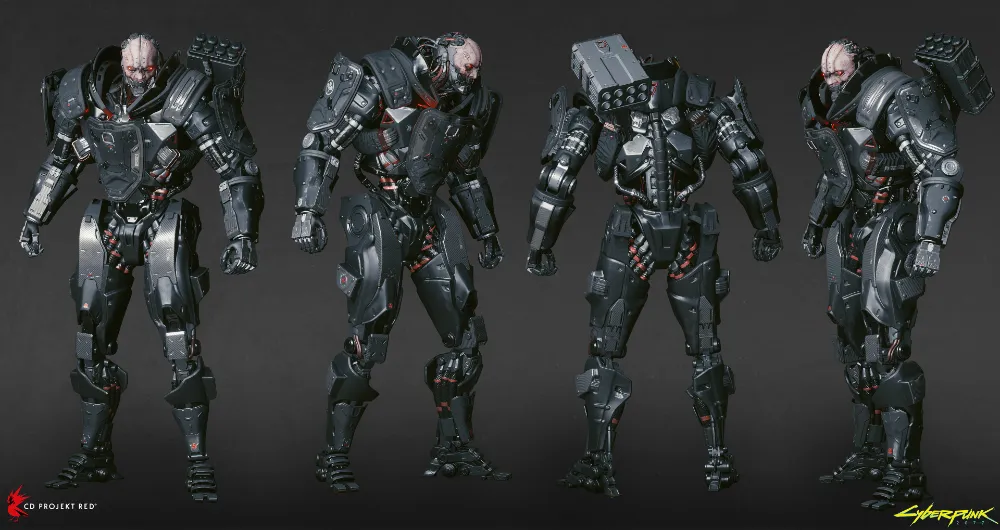 Photo: Adam Smasher, via i.pinimg.com
The Crunch-Time Casualty
Boss fights consistently ship broken because they're the last content most players will see, making them the lowest priority during the brutal final weeks of development. While studios obsessively polish opening hours and main story beats, endgame encounters often receive minimal QA attention until it's too late to fix fundamental issues.
"Boss fights are where all the game's systems converge," explains former Ubisoft QA lead Marcus Rodriguez. "They combine AI, physics, audio, visual effects, and player progression systems in ways that create exponentially more potential failure points. But they're also the content that gets tested least because most QA cycles focus on the experience that most players will actually see."
The mathematics are brutal: if 70% of players never finish games, why spend development resources perfecting encounters that most customers will never experience?
The Framerate Hitbox Disaster
Elden Ring's PC launch provided a masterclass in how technical limitations can accidentally create impossible boss encounters. Several late-game bosses, including the notorious Malenia, had hitbox detection tied to framerate, meaning players with high-end PCs experienced faster, more aggressive attack patterns than FromSoftware intended.
The issue went undetected during console-focused QA because it only manifested on PC hardware configurations that exceeded the game's target performance metrics. Players weren't just fighting Malenia — they were fighting an accidentally overclocked version that attacked 50% faster than designed.
FromSoftware's patch notes three weeks post-launch included the understated line: "Fixed issue where certain boss attack timings were incorrectly calculated on high framerate systems." Translation: we accidentally made some bosses impossible.
The Day-One Patch Dependency
Modern game development operates under the assumption that day-one patches will fix launch issues, but this safety net has created a dangerous dependency. Studios increasingly ship games with known boss encounter bugs, planning to address them post-launch when they have better data on player behavior patterns.
The problem intensifies when day-one patches fail to download or install correctly. Players who take vacation days to experience launch content find themselves facing encounters that were never intended to ship in their current state. The boss fight becomes a QA test that paying customers are unknowingly conducting.
The Physics Engine Wild Card
Boss encounters stress game engines in unique ways, often exposing physics and collision detection bugs that don't appear in normal gameplay. Mass Effect: Andromeda's Architect fights became infamous for enemies clipping through terrain, attacks registering from impossible angles, and environmental hazards spawning inside player character models.
These issues arise because boss arenas combine large-scale geometry, complex particle effects, and multiple AI entities in ways that standard gameplay loops never approach. The same physics engine that handles basic movement flawlessly can collapse under the computational load of a multi-phase boss encounter.
The Progression System Conflict
Many launch-day boss bugs stem from conflicts between encounter design and player progression systems. Bosses designed around specific player power levels become trivial or impossible when progression systems don't function as intended.
Destiny 2's launch raid encountered this exact problem: the final encounter was balanced around light levels that the progression system made impossible to reach through normal gameplay. Players either faced an impossible challenge or had to exploit progression bugs to reach appropriate power levels — both scenarios that should have been caught during QA.
The Multiplayer Multiplication Effect
Co-op and multiplayer boss encounters face exponentially more potential failure points. Each additional player introduces new variables for AI behavior, network synchronization, and resource management. When these systems fail, the results range from amusing to game-breaking.
Borderlands 3's launch featured raid bosses that would become invulnerable when certain player combinations used specific abilities simultaneously. The bug required such specific conditions that it went undetected during internal testing but became widespread once millions of players began experimenting with character builds.
The Audio-Visual Overload
Boss encounters typically feature the most intensive audio-visual sequences in games, creating perfect conditions for memory leaks, framerate drops, and system crashes. These technical issues often manifest as artificial difficulty spikes that players mistake for intentional design choices.
Final Fantasy XV's Adamantoise fight became legendary not for its strategic depth, but for the technical wizardry required to prevent the game from crashing during the extended encounter. Players developed elaborate workarounds involving graphics settings adjustments and memory management techniques just to complete the fight.
The Community Detective Work
Interestingly, gaming communities have become remarkably effective at distinguishing between intentional difficulty and technical bugs. Forums fill with frame-by-frame analysis, hitbox visualization tools, and damage calculation spreadsheets that often identify bugs faster than official QA teams.
The Hollow Knight community's analysis of the Absolute Radiance fight led to the discovery that certain attack patterns were executing with incorrect timing values, making specific phases significantly harder than intended. Team Cherry's subsequent patch confirmed the community's findings and adjusted the encounter accordingly.
The Cost of Taking Time Off
The human cost of broken launch bosses extends beyond frustration into real economic impact. Players who schedule vacation time around game launches find themselves unable to complete experiences they've anticipated for months or years. The psychological impact of hitting an insurmountable wall that shouldn't exist creates lasting negative associations with games and franchises.
The Solution Paradox
The industry knows how to prevent broken launch bosses: extended QA cycles, diverse hardware testing, and conservative launch timelines. But market pressures, shareholder expectations, and competitive release windows make these solutions economically challenging to implement.
Until the cost of shipping broken endgame content exceeds the cost of delaying releases, players will continue serving as unwitting QA testers for encounters that should have been properly tested months before launch.
The next time you encounter a boss that feels impossibly difficult on day one, remember: you're probably not supposed to be fighting the encounter in its current state — you're fighting a bug that someone planned to fix after you'd already paid for the privilege.