Hurry Up and Wait: How 2026's Biggest Games Are Making You Earn Every Boss Fight
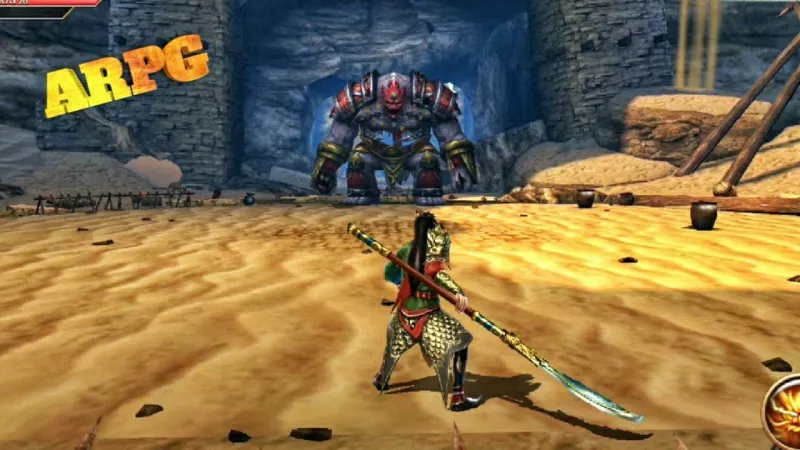
Photo: action RPG boss fight official, via i.ytimg.com
There's a specific kind of frustration that's become almost a rite of passage in 2026's most talked-about releases. You've cleared the dungeon. You've read the lore tablets. You've sat through the cutscene. And now — somehow — the game wants you to walk back through a fog-filled corridor, speak to an NPC, rest at a checkpoint, and then think about maybe approaching the boss fog gate. By the time the health bar finally materializes on screen, you've spent twenty minutes doing everything except fighting. Welcome to the patience tax.
It's not a new phenomenon, but it's never felt quite this deliberate. Across this year's biggest action RPGs, souls-adjacent titles, and narrative-heavy adventure games, the gap between boss encounters has quietly stretched to lengths that would have felt absurd in 2019. Developers are building mandatory breathing room into their designs — and the conversation about whether that's genius or just filler is getting louder by the month.
The Architecture of Anticipation
To be fair to the studios making these calls, there's real craft behind the best examples of pre-boss pacing. The principle isn't hard to grasp: tension is meaningless without release, and release is cheapened without tension. If you stumble into a boss fight thirty seconds after the last one, neither encounter lands with the weight it deserves. The emotional crescendo needs a runway.
The problem is that 'runway' has started to look a lot like 'runway, taxiway, terminal, baggage claim, and a shuttle bus to the parking garage.' Some of 2026's most anticipated titles have structured their mid-games around what designers call 'mandatory decompression windows' — stretches of exploration, dialogue, and low-stakes traversal that exist explicitly to reset the player's nervous system before the next major encounter. In theory, it's thoughtful design. In practice, it's the reason your buddy rage-quit during the third act and hasn't come back.
The distinction between purposeful pacing and outright padding often comes down to density. A walk through a beautifully realized world that reveals environmental storytelling, optional lore, and genuine player agency? That's not padding — that's the game. A five-minute horse ride down a corridor with nothing interactive on either side? That's a loading screen with better graphics.
The Mid-Game Retention Problem
Here's where the patience tax gets expensive — and not just for players. The mid-game is statistically the most dangerous stretch for player retention. Data from multiple publishers over the past several years has consistently shown that a significant percentage of players who start a game never see its second half. The mid-game is where momentum stalls, where the novelty of the opening hours has faded and the payoff of the finale is still too distant to feel real.
Long inter-boss intervals hit hardest right in that window. A player who's been grinding through a mandatory story segment for forty minutes without a meaningful combat encounter is a player whose attention is starting to drift toward their phone. And once a player mentally checks out of a game in 2026 — with a backlog that would take years to clear and a subscription service offering something new every week — getting them back is genuinely hard.
This is the cruel irony of the patience tax: the design philosophy meant to make boss fights feel more impactful may actually be the reason some players never reach those fights at all.
When the Wait Works
None of this is to say that downtime is inherently bad. Some of the most celebrated game design of the past decade has lived entirely in the space between big encounters. The walk to the final boss in Shadow of the Colossus is famous for a reason. The long, quiet stretches in Hollow Knight give its boss encounters a loneliness that makes the fights hit differently. Even FromSoftware's most demanding titles understand that the bonfire is part of the rhythm — the exhale before the inhale.
What separates those examples from 2026's more frustrating offenders is intentionality. When the downtime has texture — when it teaches you something, shows you something, or makes you feel something — it earns its place in the run time. When it exists purely to pad a content map or hit a certain hour count, players feel it in their bones. Gamers are remarkably good at detecting when a studio is buying time versus building atmosphere.
The best pacing in this year's releases treats the journey to a boss as a second kind of encounter — one with environmental storytelling and quiet dread doing the heavy lifting. The worst treats it as a hallway you have to walk before the game lets you play again.
The Souls-Like Sprawl
The souls-like genre deserves particular scrutiny here, because its conventions have spread far enough in 2026 that they're influencing games that have no business calling themselves souls-likes. The checkpoint-rest-run-to-boss loop is now a design template that dozens of studios are borrowing wholesale, often without fully understanding why it works in the original context.
In a FromSoftware title, the run back to a boss is a feature, not a bug — it teaches the zone, creates muscle memory, and builds a specific kind of respect for the encounter ahead. But copy that structure into a game with weaker enemy placement, less environmental storytelling, and a more forgiving difficulty curve, and all you've done is add mandatory travel time between the parts players actually want to play.
The souls-like sprawl of 2026 has gifted us some genuinely excellent games that understand the assignment. It's also given us a wave of imitators that have absorbed the surface-level aesthetics — the bonfires, the fog gates, the punishing boss health bars — without the underlying design philosophy that makes the waiting feel worthwhile.
So Is the Tax Worth Paying?
Ultimately, the patience tax is only worth paying if the boss on the other side of the wait is worth the wait. And here's the thing: 2026 has delivered some genuinely extraordinary boss encounters. When a game earns its downtime — when the silence before the storm actually makes the storm feel catastrophic — there's nothing quite like it in any other medium.
But the formula is fragile. One boring traversal segment too many, one NPC monologue that runs thirty seconds too long, one fog gate that requires a two-minute walk from the last checkpoint — and the spell breaks. The tension evaporates. And the boss that was supposed to be a landmark moment becomes just another obstacle between you and the end credits.
The studios getting this right in 2026 understand something fundamental: players don't resent waiting. They resent waiting for nothing. Give the downtime meaning, and the patience tax feels like fair exchange. Make players wait for its own sake, and you're not building tension — you're just burning their time.
And in a year this stacked with competition, that's a tax a lot of players are no longer willing to pay.