There's a moment in The Legend of Zelda: Breath of the Wild where you've collected every shrine, maxed out your stamina wheel, and stuffed your inventory with the most devastating weapons Hyrule has to offer. You're standing outside Hyrule Castle, and for the first time in 100+ hours, you don't feel like the underdog. You feel like a walking apocalypse with a paraglider.
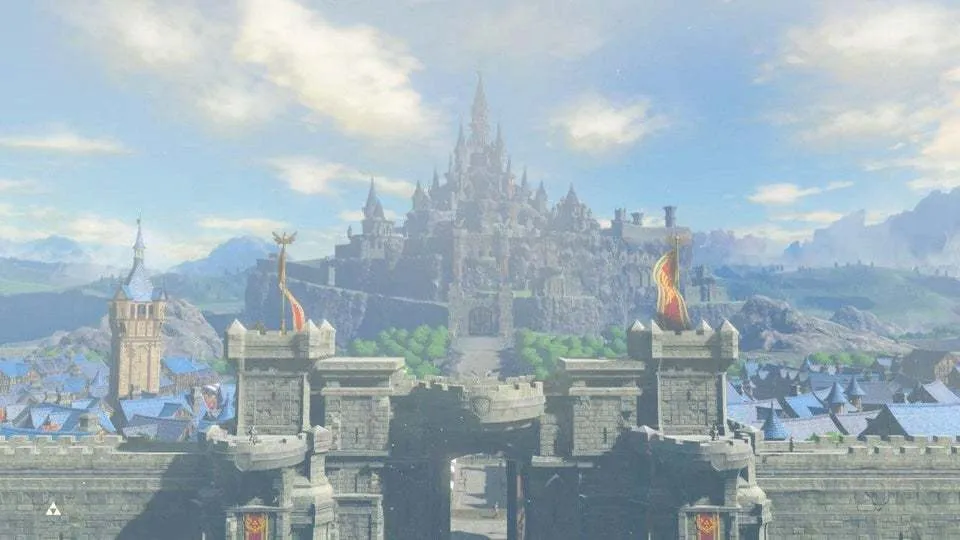 Photo: Hyrule Castle, via www.gamespot.com
That feeling? That's not an accident. It's one of the most deliberate — and brilliant — design decisions in modern gaming.
The Psychology of Earned Dominance
Game designers have known for decades that the most satisfying victories come not from lucky breaks, but from preparation meeting opportunity. The penultimate power spike — that moment when players suddenly feel overpowered right before the final confrontation — serves a crucial psychological function that goes way deeper than simple power fantasy.
"Players need to feel like they've earned their strength," explains veteran game designer Mark Brown in his Game Maker's Toolkit series. "The final boss isn't just testing your reflexes. It's testing everything you've learned, collected, and mastered throughout the entire journey."
This design philosophy shows up everywhere once you know what to look for. God of War (2018) hands you the Blades of Chaos right before the final act, transforming Kratos from a measured warrior into the rage-fueled god-killer of old. Super Metroid gives Samus the Hyper Beam in the final moments, turning Mother Brain from an insurmountable threat into space dust. Final Fantasy VII lets Cloud learn Omnislash, the ultimate sword technique, just in time to face Sephiroth.
In each case, the power spike doesn't make the final boss easier — it makes the victory feel inevitable.
The Goldilocks Zone of Player Agency
The trick is timing. Give players ultimate power too early, and the final boss becomes a pushover. Give it too late, and they feel cheated out of the full experience. The sweet spot exists in that narrow window where players have just enough time to experiment with their new abilities before putting them to the ultimate test.
Doom Eternal nails this balance perfectly. The BFG 10000 sequence doesn't just give players a massive weapon — it teaches them to think bigger, to approach combat as orbital bombardment rather than room-to-room clearing. By the time you're facing the Icon of Sin, you're not just better equipped; you're thinking like a different kind of warrior entirely.
The same principle applies across genres. Hollow Knight grants players the Void Heart and unified nail just before the Radiance fight, transforming the Knight from a struggling bug into a vessel of pure will. Celeste introduces the double-dash mechanic in Chapter 7, giving Madeline the tools she needs not just to climb the mountain, but to confront her inner demons.
The JRPG Mastery of the Pre-Boss Power Fantasy
No genre understands this concept better than JRPGs, where the penultimate power spike has been refined into an art form. Chrono Trigger doesn't just hand you powerful equipment before facing Lavos — it gives you time magic, the ability to literally manipulate the flow of battle itself. Persona 5 culminates with Joker awakening to Satanael, a demon so powerful it can kill the embodiment of societal control with a single bullet.
These moments work because they're not just mechanical upgrades — they're narrative crescendos. The power increase reflects the character's emotional and thematic journey. You're not just stronger; you're ready.
Final Fantasy XIV takes this to the next level in its Endwalker expansion. The final trials don't just test your rotation knowledge — they test your understanding of hope itself, giving players abilities that literally manifest their determination to protect others. It's mechanical complexity married to emotional payoff in ways that only JRPGs can achieve.
The Dark Souls Exception That Proves the Rule
Interestingly, some of gaming's most celebrated boss fights deliberately subvert this formula. Dark Souls famously gives players their ultimate power spike — the Lord Vessel and the ability to warp between bonfires — in the middle of the game, not at the end. The final boss, Gwyn, is deliberately designed to feel anticlimactic, a hollow shell of former greatness.
But even this exception proves the rule. FromSoftware's decision to make the final encounter feel diminished is itself a commentary on power and legacy. The true power spike comes from the player's growing mastery of the game's systems, not from any single item or ability.
The Speedrun Paradox
Here's where things get interesting: the penultimate power spike often becomes irrelevant in speedrun communities, where players skip entire sections of progression to reach the final boss as quickly as possible. Yet even speedrunners acknowledge the importance of these design decisions for first-time players.
"The power spike is part of the intended emotional journey," explains speedrunner and content creator Summoning Salt. "When we skip it, we're fundamentally changing what the game is trying to communicate about struggle, growth, and triumph."
Why This Matters for Modern Game Design
As games become increasingly complex and player expectations continue to evolve, the penultimate power spike represents a crucial lesson in player psychology. It's not enough to make players stronger — you have to make them feel like they've earned that strength through their own choices and dedication.
Live-service games struggle with this concept because they can't control when players will face their "final boss." Traditional single-player experiences have the luxury of curating every moment of the player's journey, building toward that perfect crescendo where preparation meets destiny.
The best modern games understand that the final boss fight begins long before players enter the boss room. It begins the moment they realize they have the tools, the knowledge, and the determination to face whatever comes next. That realization — that moment of earned confidence — is worth more than any damage multiplier or special ability.
Because at the end of the day, the most powerful feeling in gaming isn't being given strength — it's discovering you had it all along.
 Photo: Mount Rushmore, via images5.alphacoders.com