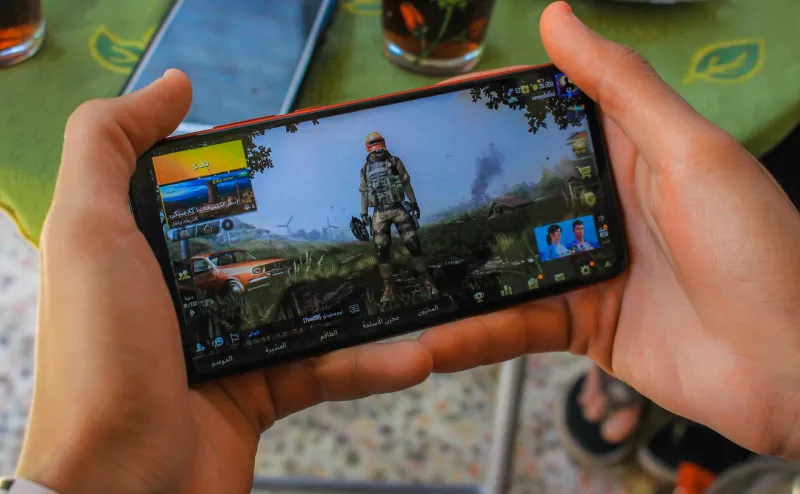
Forget Myers-Briggs. Ditch your horoscope. The most revealing personality assessment might already be sitting in your Steam library, PlayStation trophies, or Xbox achievements. How you choose to play games – whether you're blitzing through main stories or spending 200 hours perfecting every side quest – reveals more about your psychological makeup than most people realize.
A growing body of research suggests that gaming playstyles correlate strongly with real-world personality traits, decision-making patterns, and social behaviors. From the methodical completionist who must collect every collectible to the chaos-loving button-masher who skips tutorials entirely, your gaming habits create a psychological fingerprint that's surprisingly accurate at predicting how you approach life outside the digital realm.
The Completionist: Masters of Delayed Gratification
If you're the type who won't move to the next area until you've found every hidden chest, talked to every NPC, and unlocked every achievement, you're likely exhibiting high levels of conscientiousness – one of the "Big Five" personality traits psychologists use to understand human behavior.
Dr. Rachel Martinez, who studies gaming psychology at UC Berkeley, has found that completionists typically score higher on measures of self-discipline, organization, and goal-oriented thinking. "These players demonstrate exceptional delayed gratification," she explains. "They're willing to sacrifice immediate progress for long-term satisfaction, which mirrors how they approach major life decisions."
Completionists often excel in careers requiring attention to detail and systematic approaches. They're more likely to read contracts thoroughly, research major purchases extensively, and plan vacations months in advance. However, they may also struggle with decision paralysis when faced with too many options – a trait that manifests in gaming as "backlog anxiety" or the inability to start new games while others remain unfinished.
The completionist mindset has exploded in popularity with the rise of achievement systems and percentage-based completion tracking. Games like The Witcher 3 and Assassin's Creed Valhalla cater specifically to this psychology, offering hundreds of hours of optional content that completionists find irresistible.
The Speedrunner: Risk-Takers and Optimization Addicts
On the opposite end of the spectrum, speedrunners represent a fascinating blend of risk tolerance and perfectionism. These players skip story content, exploit glitches, and optimize every movement to achieve the fastest possible completion times. Their psychological profile reveals high levels of openness to experience combined with competitive drive and analytical thinking.
Speedrunner communities have developed their own subcultures around games like Super Mario 64, The Legend of Zelda: Breath of the Wild, and Dark Souls. Members often display traits associated with entrepreneurial thinking: they're comfortable with uncertainty, quick to adapt strategies, and motivated by measurable improvement.
"Speedrunners are essentially conducting real-time experiments," notes Dr. James Chen, a cognitive psychologist who studies gaming communities. "They form hypotheses about optimal strategies, test them under pressure, and iterate based on results. This mirrors the mindset of successful innovators and problem-solvers in many fields."
Interestingly, speedrunners often struggle with games that can't be optimized or "solved" in traditional ways. Open-world games with random elements or heavily story-focused experiences may feel frustrating to players accustomed to finding the mathematically perfect approach.
The Explorer: Curious Minds and Intrinsic Motivation
Explorers prioritize discovery over efficiency. They're the players who wander off the beaten path, experiment with unusual character builds, and spend hours in photo modes capturing the perfect screenshot. This playstyle correlates with high openness to experience and intrinsic motivation – the drive to engage in activities for their own sake rather than external rewards.
Explorers often report the highest levels of gaming satisfaction, even when they don't "complete" games in traditional terms. They're motivated by novelty, aesthetic appreciation, and the joy of discovery. In real-world contexts, explorers tend to be creative professionals, lifelong learners, and individuals who prioritize experiences over material possessions.
Games like No Man's Sky, Subnautica, and Journey appeal specifically to explorer psychology, offering vast spaces to discover without rigid objectives or time pressures. These players often struggle with linear, heavily scripted experiences that don't allow for personal expression or deviation from predetermined paths.
The Social Gamer: Community-Driven and Relationship-Focused
For some players, games are primarily social experiences. These gamers gravitate toward multiplayer titles, guild systems, and community-driven content. They're more likely to stick with games that offer strong social features, even if the core gameplay becomes repetitive.
Social gamers typically score high on agreeableness and extraversion. They use games as platforms for building and maintaining relationships, often developing friendships that extend beyond gaming. Research suggests these players experience lower levels of gaming-related stress and higher overall life satisfaction when their gaming habits align with their social needs.
The rise of games like Among Us, Fall Guys, and Fortnite reflects the growing importance of social gaming. These titles succeed not just because of their gameplay mechanics, but because they facilitate shared experiences and community building.
The Button-Masher: Intuitive Decision-Makers
Often dismissed as "casual" or "unskilled," button-mashers represent a legitimate playstyle that correlates with intuitive decision-making and comfort with ambiguity. These players prefer to learn through experimentation rather than studying guides or tutorials. They're comfortable making suboptimal choices if those choices feel fun or interesting in the moment.
Button-mashers often excel in creative fields and entrepreneurial ventures where rapid iteration and willingness to fail are valuable traits. They're less likely to suffer from analysis paralysis and more willing to take action with incomplete information.
The Hybrid Reality
Of course, most players don't fit neatly into single categories. Gaming preferences can shift based on mood, available time, and life circumstances. A completionist might speedrun familiar games for stress relief, while an explorer might adopt completionist habits in games they particularly enjoy.
The key insight isn't that gaming habits determine personality, but that they reveal existing psychological patterns in a low-stakes environment. Understanding your gaming preferences can offer valuable self-knowledge about your motivations, stress responses, and decision-making patterns.
Practical Applications
This research has practical implications beyond self-discovery. Game developers increasingly use personality-based design principles to create more engaging experiences. Educational institutions are exploring how gaming preferences might inform learning styles and career guidance.
Employers, too, are beginning to recognize that gaming habits can reveal valuable workplace traits. A completionist might excel at quality assurance roles, while a speedrunner might thrive in fast-paced, optimization-focused positions.
The Bottom Line
Your gaming playstyle isn't just about entertainment preferences – it's a window into your psychological makeup. Whether you're methodically clearing every map marker or rushing toward the credits, you're revealing fundamental aspects of how your mind works.
The next time someone dismisses gaming as "just entertainment," remind them that few activities offer such clear insights into human psychology. In a world of personality tests and self-help assessments, sometimes the most accurate mirror is the one reflecting your gaming choices back at you.
After all, how you choose to play when nobody's watching might be the most honest thing about you.