
Every gamer knows the feeling: you're twenty attempts deep into a brutal boss fight, your controller is slick with sweat, and that familiar "YOU DIED" screen is burned into your retinas like a neon sign from hell. Your first instinct is to rage-quit, maybe throw something soft at the TV, and question why you ever picked up a controller in the first place.
But what if I told you that every single one of those deaths is actually making you a better player? Not in some feel-good, participation trophy way — but in a measurable, neurologically proven sense that turns failure into the most effective learning mechanism in gaming.
The Science of Failure-Based Learning
Neuroscientists have known for decades that our brains are wired to learn more effectively from failure than success. When we fail at something, our brain releases a cocktail of stress hormones that actually enhance memory formation and pattern recognition. It's an evolutionary survival mechanism — if something almost killed you, you better remember exactly what went wrong.
Video game boss fights exploit this biological reality with surgical precision. Every death is a data point, every respawn a chance to apply what your brain just learned under stress. The magic happens in that split second between the death screen and hitting "Continue" — your subconscious is already processing what went wrong, cataloging attack patterns, and adjusting your mental model of the fight.
Take Elden Ring's Margit, the Fell Omen — a boss specifically designed to teach you the game's combat rhythm through repeated failure. Your first five deaths teach you his basic moveset. Deaths six through ten show you the timing windows. By death fifteen, you're not just surviving his attacks — you're predicting them.
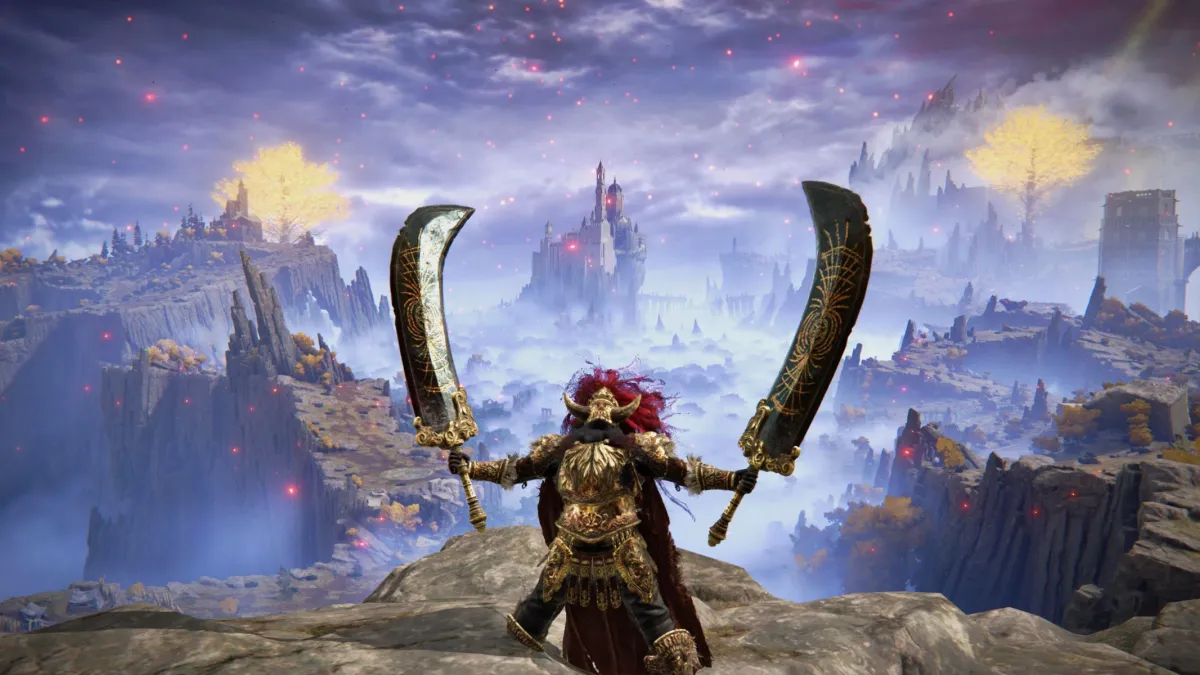 Photo: Elden Ring, via doquizzes.com
The Involuntary Tutorial System
Traditional tutorials are boring because they're safe. There's no stakes, no emotional investment, no reason for your brain to prioritize the information. Boss fights flip this script entirely — they're involuntary tutorials disguised as epic confrontations.
Consider Cuphead, a game that weaponizes this concept with ruthless efficiency. Every boss is essentially a pattern-recognition exam administered at gunpoint. The game doesn't explain that Dr. Kahl's Robot has three distinct phases with different vulnerability windows — it makes you die enough times to figure it out yourself. The result? Players who beat Cuphead don't just know how to play Cuphead — they've developed transferable skills in reading visual cues, timing precision, and maintaining focus under pressure.
Returnal takes this even further by making death a literal part of the story. Each loop teaches you something new about the environment, enemy behavior, or weapon synergies. The game is explicitly training you through failure, and the narrative framework makes every death feel purposeful rather than punitive.
The Pattern Recognition Engine
Here's where it gets really interesting: your brain doesn't just learn from your deaths — it learns from near-deaths, close calls, and moments where you barely scraped by with a sliver of health. Every boss encounter is feeding data into your subconscious pattern recognition engine.
Watch any skilled player tackle a boss they've never seen before, and you'll witness this system in action. They're not just reacting to individual attacks — they're reading the boss's "body language," anticipating combo strings, and identifying safe zones based on subtle visual and audio cues that less experienced players miss entirely.
This is why Dark Souls veterans can often beat new FromSoftware bosses in fewer attempts than newcomers, even on their first encounter. Their brains have been trained through thousands of deaths to recognize the universal language of boss design — the wind-up animations, the audio cues, the spacing requirements.
The Confidence Cascade Effect
The most powerful aspect of failure-based learning in boss fights is what I call the "confidence cascade." Once you finally beat a boss that's been destroying you for hours, something fundamental shifts in your gaming psyche. You don't just gain confidence in that specific encounter — you develop a deeper understanding of your own ability to overcome seemingly impossible challenges.
This confidence transfers to other games, other bosses, other challenges. Players who've survived the trial by fire of games like Sekiro or Celeste report feeling more capable and persistent in all their gaming experiences. They've learned that the feeling of "this is impossible" is usually just the prelude to "oh wait, I've got this."
Reframing the Death Screen
The next time you see that death screen, try reframing it. Instead of "I failed again," think "I just gathered more intelligence." Every death is a reconnaissance mission. Every respawn is a chance to apply battlefield intelligence.
The boss isn't your enemy — it's your teacher. A very aggressive, very deadly teacher that's using negative reinforcement to drill lessons into your muscle memory. And just like any good teacher, it won't let you pass until you've truly mastered the material.
The Mastery Mindset
The best boss fights understand this psychological dynamic and lean into it. They're not just tests of reflexes or memorization — they're carefully calibrated learning experiences that use failure as the primary teaching tool. The difficulty isn't arbitrary punishment — it's the precise amount of pressure needed to force your brain into learning mode.
So the next time you're staring at attempt number 47 on some nightmare boss, remember: you're not just playing a game. You're participating in one of the most effective learning systems ever devised, one that's literally rewiring your brain to make you better at recognizing patterns, maintaining focus under pressure, and persisting through challenges.
That death screen isn't the end of your progress — it's the beginning of your education.