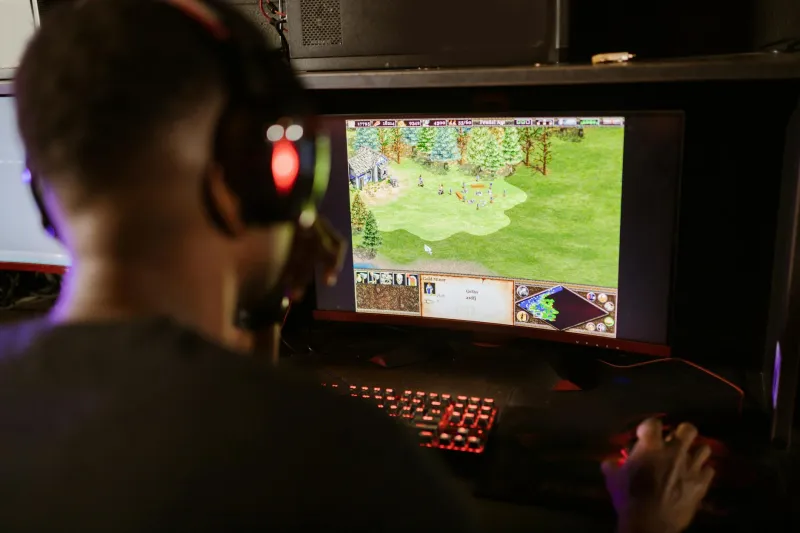
There's nothing quite like that moment when you realize you've been played—in the best possible way. You're facing down a final boss that seemed impossible hours ago, but now every attack pattern makes sense, every dodge feels natural, and every counter-attack flows like muscle memory. The game hasn't just challenged you; it's taught you to become the player you needed to be.
While some games are notorious for their difficulty spikes and brick wall bosses, the truly great ones understand that the best teacher isn't frustration—it's progression. These titles use their boss encounters as a carefully orchestrated curriculum, where each fight builds on the last, reinforcing mechanics while gradually ramping up complexity.
The Perfect Exam: When Final Bosses Feel Earned
The hallmark of exceptional boss design isn't just difficulty—it's relevance. Take Sekiro: Shadows Die Twice, where every major boss encounter teaches you a specific aspect of the combat system. Guardian Ape forces you to master the camera and positioning. Genichiro drills timing and deflection into your muscle memory. By the time you face Isshin, the final boss isn't introducing new concepts—he's testing everything you've learned in a symphony of steel and precision.
This approach transforms what could be a frustrating roadblock into a satisfying culmination. Players report that "aha" moment when they realize they're not just button-mashing their way through—they're executing techniques that the game has been patiently teaching them all along.
Building Blocks: How Progressive Boss Design Works
The most effective teaching bosses follow a clear progression model. Early encounters introduce single mechanics in isolation. Mid-game bosses combine two or three elements. The final confrontation becomes a comprehensive test that feels challenging but never unfair.
Hollow Knight exemplifies this approach brilliantly. The False Knight teaches basic timing and positioning. Hornet introduces the concept of aggressive enemies that require both offense and defense. Soul Master adds vertical movement and environmental awareness. Each boss encounter builds your toolkit while the game's exploration segments let you practice in lower-stakes situations.
What makes this work is the spacing between lessons. Players have time to internalize each new skill before the next test arrives, creating a natural learning curve that feels organic rather than forced.
The Souls Formula: Punishment That Teaches
FromSoftware has perfected the art of educational brutality. Their boss fights are infamous for their difficulty, but what often goes unnoticed is how methodically they teach. Every death carries information. Every failed attempt reveals a new pattern or timing window.
Elden Ring's Margit serves as a perfect example of this philosophy in action. New players often struggle with his delayed attacks and varied moveset, but experienced Souls veterans recognize him as a comprehensive exam of the series' core principles: patience, observation, and adaptation. He's not just difficult—he's specifically designed to identify and correct bad habits that would doom players in later encounters.
The genius lies in how the game rewards the learning process itself. That moment when you finally read Margit's delayed overhead slam and punish it with a critical hit? That's not just a mechanical victory—it's proof that you've internalized the game's language.
Modern Masters: Contemporary Examples
Hades deserves recognition for revolutionizing the teaching boss concept in the roguelike space. Each of the four main bosses represents a different aspect of the game's combat system, but the repeated runs mean players can experiment with different approaches and weapons against familiar opponents. Megaera teaches projectile management, the Bone Hydra emphasizes positioning and area control, Theseus and the Minotaur introduce team fighting dynamics, and Hades himself combines everything into a multi-phase masterclass.
What sets Hades apart is how it uses narrative progression to enhance the learning experience. As Zagreus develops relationships with the bosses through repeated encounters, players simultaneously develop mastery over the combat system. The story and mechanical progression intertwine perfectly.
The Teaching Philosophy: Why This Matters
Games that teach through their boss fights understand a fundamental truth about learning: the best education doesn't feel like education at all. When players are engaged in overcoming a challenge, they're naturally receptive to absorbing new information and skills.
This approach also creates a more inclusive experience. Instead of gatekeeping content behind arbitrary skill walls, these games provide the tools and training necessary for success. Players feel empowered rather than excluded, leading to broader appeal and longer engagement.
The Ripple Effect: Beyond Boss Fights
The principles of progressive boss design extend beyond individual encounters. Games that master this approach often excel at teaching their systems holistically. Regular enemies become mini-lessons, environmental challenges reinforce specific skills, and even the level design supports the educational framework.
Celeste demonstrates this beautifully. Each chapter introduces new mechanics through safe, low-pressure scenarios before incorporating them into platforming challenges. The boss encounters—while not traditional combat—serve as comprehensive tests of movement mastery that feel satisfying rather than punishing.
The Ultimate Victory
The best boss fights don't just test what you know—they reveal what you've become. When a game successfully teaches through its challenges, the final victory feels earned in the deepest sense. You haven't just beaten the boss; you've proven that you've grown as a player.
These games understand that the real boss rush isn't just about defeating enemies—it's about defeating your own limitations, one perfectly designed encounter at a time.