The Boss That Became a Meme: How Gaming's Most Notorious Difficulty Spikes Took on a Life of Their Own Online
The Boss That Became a Meme: How Gaming's Most Notorious Difficulty Spikes Took on a Life of Their Own Online
Somewhere on the internet right now, someone is posting a screenshot of their death count against Malenia, Blade of Miquella. The number is probably embarrassing. The comments will be a mix of sympathy, advice, and people humble-bragging about beating her on their third try. And somehow, this ritual of shared suffering has become one of gaming's most powerful cultural forces.
Welcome to the age of the meme boss — where certain encounters transcend their source material to become internet shorthand for digital masochism, community bonding, and the strange satisfaction of eventually overcoming the impossible.
The Anatomy of a Viral Villain
Not every difficult boss becomes a meme. For every Malenia or Ornstein & Smough, there are dozens of equally challenging encounters that fade into obscurity. So what separates the legendary difficulty spikes from the merely hard?
The formula seems to require three elements: genuine challenge that stops most players dead, a memorable presentation that makes for good clips, and timing that coincides with the right cultural moment.
Take Malenia from Elden Ring. She's objectively brutal — a late-game optional boss with multiple phases, healing mechanics, and attacks that can one-shot most builds. But she's also visually stunning, with a distinctive design that looks incredible in screenshots. Most importantly, she arrived during the height of Elden Ring's cultural dominance, when millions of players were sharing their experiences simultaneously.
Contrast this with equally difficult bosses from smaller games that never achieved meme status. Challenge alone isn't enough — you need the perfect storm of difficulty, presentation, and cultural timing.
The Streaming Amplification Effect
The rise of Twitch and YouTube has fundamentally changed how difficult bosses function in gaming culture. Where previous generations of players suffered in relative isolation, modern difficulty spikes become performance art.
Streamer reactions to notorious bosses have become content unto themselves. Watching someone encounter Malenia for the first time has become its own entertainment category, complete with compilation videos and reaction compilations. This creates a feedback loop where the boss's reputation grows beyond the actual game.
"We're not just playing games anymore," observes content creator and Dark Souls veteran LobosJr. "We're performing our relationship with them. A boss fight isn't just about beating the boss — it's about how entertaining your struggle is to watch."
This has led to what some call "performance difficulty" — encounters designed not just to challenge players, but to generate shareable moments of triumph and defeat.
The Hall of Fame: Gaming's Most Meme-ified Bosses
Ornstein & Smough (Dark Souls) — The original meme boss duo that established the template. Their popularity spawned countless "dynamic duo" references and taught an entire generation that sometimes the real boss is the friends we made along the way to git gud.
Malenia, Blade of Miquella (Elden Ring) — The current reigning champion of boss memes. Her "I am Malenia" introduction has been remixed, parodied, and referenced across social media. Death count screenshots against her have become a rite of passage.
Sans (Undertale) — Proof that indie games can create legendary difficulty spikes. Sans transcended gaming to become a general internet meme, with his music and dialogue appearing in contexts completely unrelated to gaming.
Margit the Fell Omen (Elden Ring) — Notable for being many players' first major roadblock in Elden Ring. His "Put these foolish ambitions to rest" line became an instant meme, often quoted whenever someone fails at any task.
Ludwig the Holy Blade (Bloodborne) — The boss that taught players that sometimes the scariest transformation is from beast back to man. His orchestral boss music became a meme in its own right.
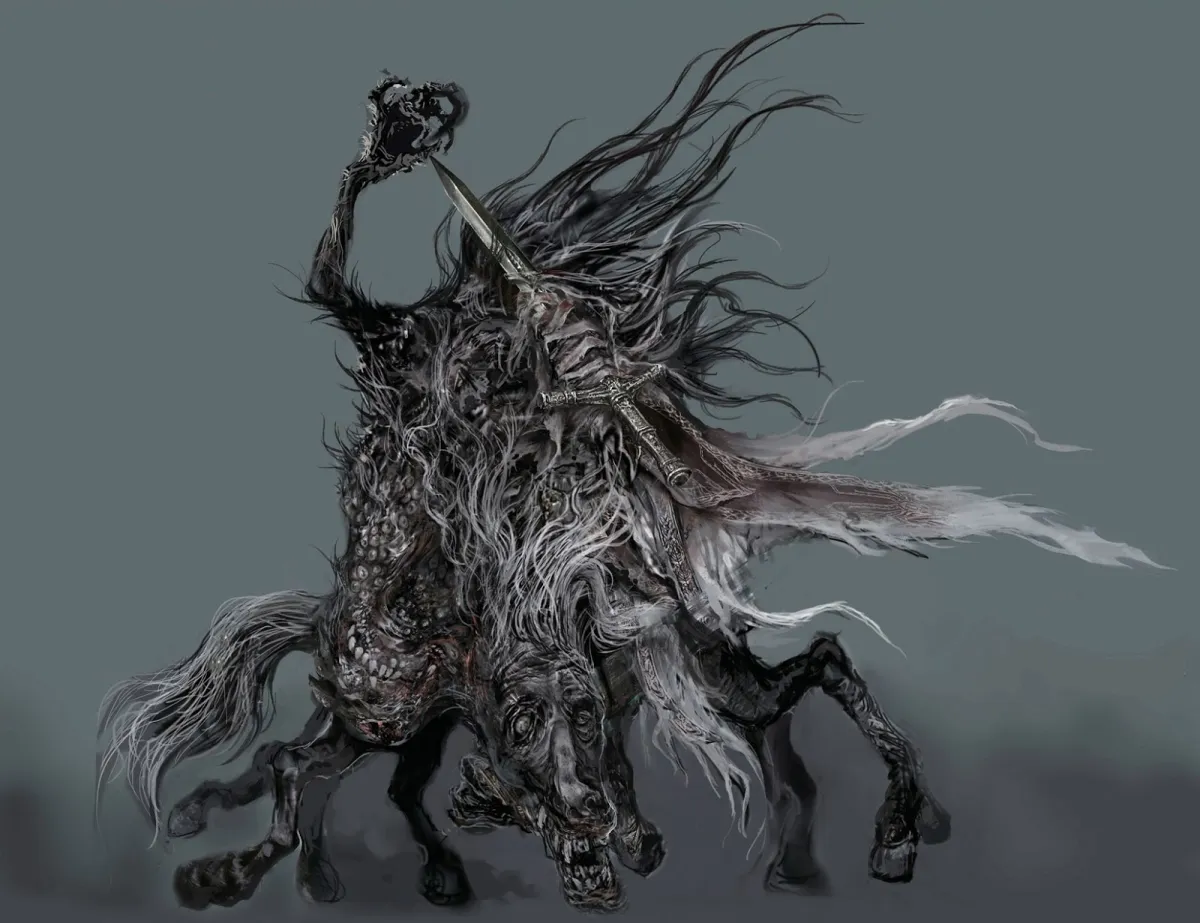 Photo: Ludwig the Holy Blade, via blogger.googleusercontent.com
The Psychology of Shared Suffering
Why do players embrace bosses that cause them genuine frustration? The answer lies in the psychology of shared experience and the gamification of difficulty itself.
"There's something deeply human about bonding over mutual struggle," explains Dr. Jamie Madigan, author of Getting Gamers. "These boss fights become cultural touchstones — if you've beaten Malenia, you're part of a specific club with shared understanding."
This explains why boss difficulty discussions often feel more like war stories than game analysis. Players aren't just describing mechanics; they're sharing trauma and triumph in equal measure.
The meme-ification also serves a practical purpose: it normalizes failure. When everyone is joking about their death count against a particular boss, dying repeatedly stops feeling like personal inadequacy and starts feeling like participation in a cultural ritual.
Developers Designing for Virality
The success of meme bosses hasn't gone unnoticed by developers. There's growing evidence that some studios are deliberately designing encounters with viral potential in mind.
FromSoftware, in particular, seems to understand the formula. Each of their recent games has featured at least one boss clearly designed to become a cultural talking point. These encounters often share specific traits: memorable one-liners, distinctive visual designs, and mechanical gimmicks that generate strong reactions.
But this raises questions about design philosophy. Are developers creating genuinely challenging encounters, or are they manufacturing artificial difficulty for social media engagement?
"There's definitely a tension there," admits indie developer Bennett Foddy, creator of Getting Over It. "You want your game to be challenging and memorable, but you also want people to actually finish it. The sweet spot is creating something that feels impossible until the moment it clicks."
The Dark Side of Difficulty Culture
The meme-ification of difficult bosses isn't entirely positive. The culture around these encounters can become exclusionary, with "git gud" mentality creating barriers for players who struggle with motor skills, reaction times, or simply don't have dozens of hours to master a single encounter.
Moreover, the focus on viral difficulty can overshadow other aspects of game design. Some excellent games with thoughtful, balanced challenges get ignored in favor of titles that generate more dramatic social media reactions.
There's also the risk of difficulty inflation — each new game trying to create an even more punishing boss to capture social media attention. This arms race could ultimately harm the medium by prioritizing spectacle over thoughtful design.
The Future of Meme Bosses
As gaming culture continues to evolve, so too will the nature of viral difficulty. Live-service games are experimenting with time-limited raid bosses that create artificial scarcity around challenging content. Meanwhile, accessibility options are becoming more sophisticated, allowing more players to participate in these cultural moments.
The next evolution might be procedurally generated bosses that create unique challenges for each player, making every encounter potentially meme-worthy while avoiding the repetition that can diminish a boss's mystique.
The Verdict
Meme bosses represent something powerful in gaming culture: the transformation of individual struggle into collective experience. They remind us that games aren't just entertainment products — they're shared cultural artifacts that bring communities together through mutual suffering and triumph.
Whether this trend enhances or diminishes gaming depends largely on how developers choose to wield this power — but one thing's certain: as long as players exist, there will always be that one boss that makes them question their life choices while simultaneously planning their next attempt.