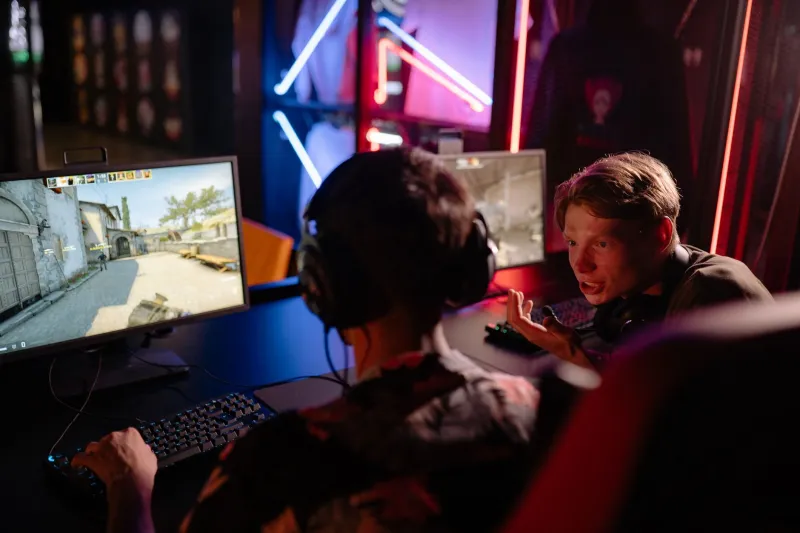
The New Game Smell: Why Opening Hours of a Fresh Release Hit Different Than Any Other Gaming Experience
You know the feeling. It's launch day, you've cleared your schedule, and you're about to boot up a game that nobody — not even the streamers — has fully figured out yet. Your Discord is buzzing with spoiler-free excitement. Twitter is a minefield of carefully cropped screenshots. And you're about to experience something that millions of other players are discovering at the exact same moment.
This is the new game smell — that intoxicating rush of experiencing a fresh release in its opening hours. It's a phenomenon that transcends any individual title, yet it's becoming increasingly rare in an era of Game Pass libraries, patient gaming, and endless backlogs.
The Neuroscience of Novelty
There's actual science behind why new games hit different. Dr. Robert Sapolsky's research on dopamine shows that our brains release more of the feel-good chemical when we encounter something genuinely unexpected. When you fire up a game that's been in development for years but is new to you, your neural pathways are lighting up in ways they simply can't when you're replaying something familiar.
 Photo: Dr. Robert Sapolsky, via www.barclayagency.com
"The anticipation is often more powerful than the experience itself," explains gaming psychologist Dr. Jamie Madigan. "But with a truly fresh release, you get both the anticipation payoff and continued novelty rewards throughout those opening hours."
This explains why that first boss encounter in a new game feels more intense than replaying your favorite Dark Souls fight for the hundredth time. Your brain doesn't know what's coming next.
The Communal Discovery Factor
But the neuroscience only tells half the story. The other half is social — and it's what separates new game experiences from solo backlog sessions.
When Elden Ring launched in February 2022, the internet became a real-time discovery engine. Players were sharing cryptic location hints, debating build strategies for bosses nobody had mastered yet, and collectively figuring out the game's most obscure secrets. You weren't just playing a game; you were participating in a cultural moment.
 Photo: Elden Ring, via imgcdn.stablediffusionweb.com
Contrast that with picking up Elden Ring today. The wikis are complete. The optimal routes are mapped. The surprise is gone. You're experiencing someone else's discovery rather than making your own.
How Developers Weaponize Wonder
Smart developers understand this psychology and design their opening hours accordingly. They're not just creating a tutorial — they're crafting a first impression that needs to work for streamers, critics, and regular players simultaneously.
Look at how The Legend of Zelda: Tears of the Kingdom handled its opening. Nintendo knew players would immediately try to break the game's physics systems, so they front-loaded the most spectacular interactive possibilities. Those viral videos of players building flying machines weren't accidents — they were the intended response to carefully designed systems.
Similarly, God of War Ragnarök opened with a boss fight specifically designed to showcase the game's visual and mechanical improvements over its predecessor. Santa Monica Studio wasn't just starting the story; they were making a statement about what four years of development had accomplished.
The Streaming Effect
The rise of Twitch and YouTube has fundamentally changed how opening hours function. Developers now know their games will be experienced by millions of viewers before most players even buy them. This has led to what industry insiders call "stream-friendly design" — opening sequences that look great in clips and generate shareable moments.
Hades became a cultural phenomenon partly because its opening runs were perfect for streaming. Each attempt was self-contained, visually spectacular, and generated genuine reactions from streamers encountering new dialogue and story beats.
But this focus on streaming has also created a new form of FOMO. Watching someone else experience those first hours can actually diminish your own eventual playthrough. You've already seen the surprise, even if you haven't pressed the buttons yourself.
The Economics of Excitement
The new game smell isn't just psychological — it's economic. Publishers know that launch week sales often determine a game's long-term success, which puts enormous pressure on those opening hours to deliver.
This has led to some concerning trends. Games increasingly front-load their best content, saving weaker material for later when players are already invested. The opening hours of Cyberpunk 2077 were genuinely impressive, masking deeper structural issues that only became apparent after extended play.
Conversely, some of gaming's best experiences deliberately subvert these expectations. The Outer Wilds starts slowly and builds to mind-blowing revelations. Disco Elysium opens with a hangover simulation that actively discourages many players. These games sacrifice immediate impact for long-term satisfaction — a risky bet in the attention economy.
The Patient Gaming Paradox
The rise of patient gaming — waiting for sales, patches, and complete editions — creates an interesting tension with the new game smell phenomenon. Patient gamers often get objectively better experiences: cheaper prices, fixed bugs, and complete content packages.
But they sacrifice something intangible: the shared cultural moment of discovery. By the time patient gamers pick up a title, the discourse has moved on. The spoilers are everywhere. The community has solved all the mysteries.
This creates a paradox where the "worse" version of a game — buggy, expensive, incomplete — can actually provide a more memorable experience than the polished final product.
Preserving the Magic
So how do we preserve the new game smell in an era of endless content and shortened attention spans?
Some developers are experimenting with time-limited experiences. Fortnite's live events create genuine shared moments that can't be replayed. Fall Guys used server-side changes to keep the experience fresh even for experienced players.
Others are focusing on procedural generation and emergent gameplay to maintain novelty even in familiar systems. No Man's Sky continues to surprise players years after launch through major content updates that fundamentally change the experience.
The Verdict
The new game smell matters because it represents something increasingly rare in our content-saturated world: genuine surprise. Those opening hours with a fresh release offer a unique combination of personal discovery and communal experience that no amount of backlog diving can replicate.
In a gaming landscape where everything is instantly available and immediately spoiled, protecting those first few hours of wonder might be the most important thing developers and players can do together.