Press Start for Everyone: How Accessibility Modes Are Quietly Changing What It Means to Actually Finish a Game

There's a question that's been quietly simmering in gaming communities for years, and it's finally boiling over: if you turned on assist mode to beat a game, did you actually beat it? It sounds like a simple debate — the kind of thing that gets argued to death in Reddit threads and then forgotten. But the more you dig into it, the more it reveals something fundamental about how we define achievement, who games are actually made for, and where the industry is heading as budgets balloon and publishers demand broader audiences.
This isn't a new conversation, but it's never been more urgent. Games in 2026 are shipping with accessibility suites so sophisticated they'd have seemed absurd a decade ago — and the players who built their identities around overcoming hard games are starting to feel the ground shift beneath them.
The New Normal: What Modern Accessibility Actually Looks Like
Let's get specific, because the conversation tends to fall apart when people talk about "easy mode" like it's a single binary switch. It isn't. Not anymore.
Celeste — still one of the most discussed examples years after its release — didn't just bolt on a difficulty slider. It introduced Assist Mode as a separate, opt-in system that lets players adjust game speed, enable invincibility, or grant themselves infinite stamina. Crucially, the game doesn't shame you for using it. There's no asterisk on your save file. No achievement locked behind a "pure" run requirement. The developers made a deliberate choice: they wanted everyone who wanted to see Madeline's story through to be able to do so.
God of War took a different approach. Santa Monica Studio built four named difficulty tiers, each tuned not just around enemy damage output but around how aggressively AI engages, how generous parry windows are, and how much the game telegraphs incoming attacks. The result is a game that a ten-year-old and a Soulslike veteran can both genuinely enjoy — and both walk away feeling like they earned something.
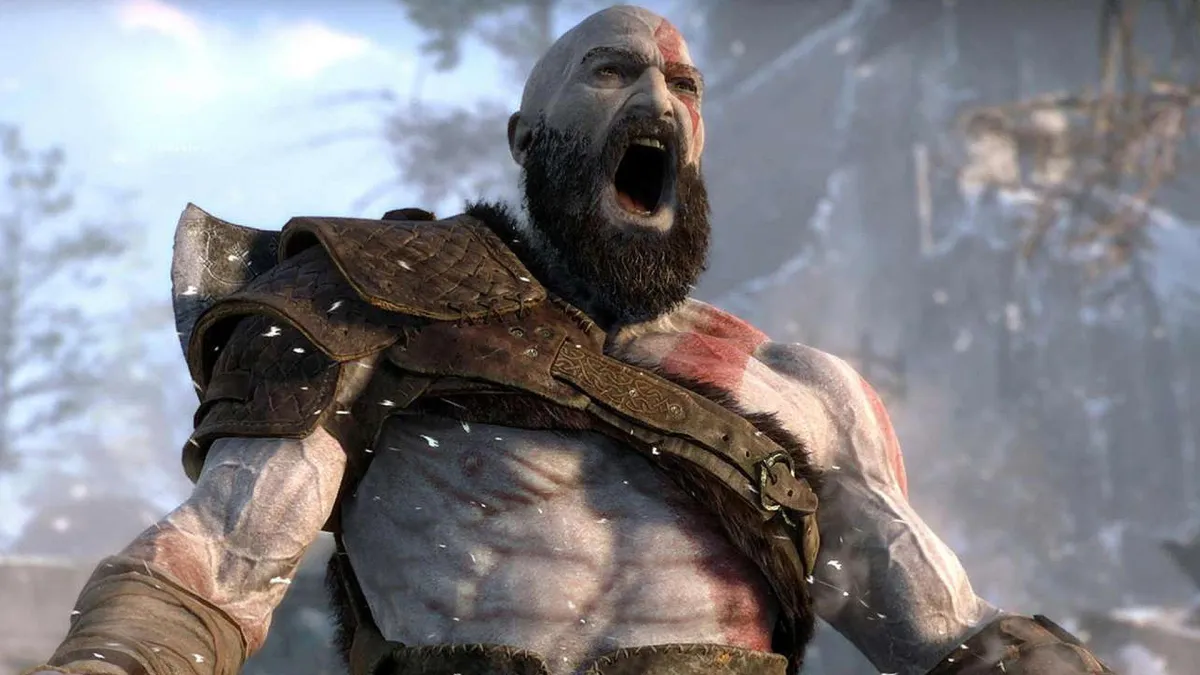 Photo: God of War, via img-s-msn-com.akamaized.net
More recently, games like Hades II and Final Fantasy VII Rebirth have continued this trend, offering granular toggles that let players customize challenge rather than simply reduce it. You can crank enemy aggression to max while keeping your own damage output high. You can slow the game down during complex encounters without turning enemies into punching bags. The menu has gotten a lot more interesting than just "Easy, Normal, Hard."
The Purist Pushback — and Why It Has a Point
Here's where it gets complicated, because the hardcore crowd isn't entirely wrong to feel something when this conversation comes up.
A significant part of gaming's identity — particularly in the action, platformer, and RPG spaces — has always been built around the idea of earned mastery. You didn't just watch Sekiro's story. You learned its systems, internalized its rhythm, failed hundreds of times, and then — finally — clicked. That moment of clicking is genuinely one of the most rewarding experiences interactive entertainment can produce. It's not elitism to want to protect that. It's an acknowledgment that friction, when designed well, is a feature.
The concern isn't really about players who use assist modes. Most hardcore gamers, if they're being honest, don't actually care what settings a stranger plays on. The concern is subtler: that as accessibility options become standard, publishers will use their existence as cover to ship games that are fundamentally undertuned at their intended difficulty level. "Don't worry, just turn it down" becomes an excuse not to QA the normal experience properly.
There's also the achievement question, which gaming platforms have largely punted on. On PlayStation and Xbox, trophies and achievements are typically awarded regardless of which settings you're using. That bothers some players — not because they want to gatekeep completion, but because they feel the systems that are supposed to mark genuine accomplishment have become hollow.
The Other Side: Who Gets Left Out When We Glorify Suffering
But step back from the purist position for a moment and consider who isn't in that conversation at all.
Players with motor disabilities, visual impairments, cognitive processing differences, or chronic pain conditions aren't asking to be handed victories. They're asking to be included in experiences that the rest of the market takes for granted. A player with limited hand mobility who uses assist mode to get through God of War's story isn't diminishing your playthrough. They're having their own.
The completion rate data is also worth sitting with. Industry analysts have consistently found that a significant portion of players — estimates vary, but figures around 20 to 40 percent depending on the title — never finish the games they start. Not because the games are too hard, necessarily, but because life intervenes, time is scarce, and the emotional cost of repeated failure eventually outweighs the reward of pushing through. Accessibility options don't just serve players with disabilities. They serve parents with 90 minutes a week to game, adults returning to the hobby after a decade away, and people who simply process spatial challenges differently.
AAA publishers are acutely aware of this. When you've spent $200 million making a game, you want as many people as possible to reach the ending — because word of mouth from people who actually finished the story is worth more than reviews from the 15 percent who made it to the credits on hard mode.
Where the Line Actually Is
The most honest version of this debate isn't "accessibility modes good or bad." It's about design intent and transparency.
When a developer builds a game specifically around the challenge — when the difficulty is the experience, as it is in something like Elden Ring or a traditional Mega Man title — there's a legitimate design argument for not offering a formal easy mode. FromSoftware has held that line, and the community around their games exists partly because of it. That's a valid creative choice, and it produces a specific, valuable kind of game.
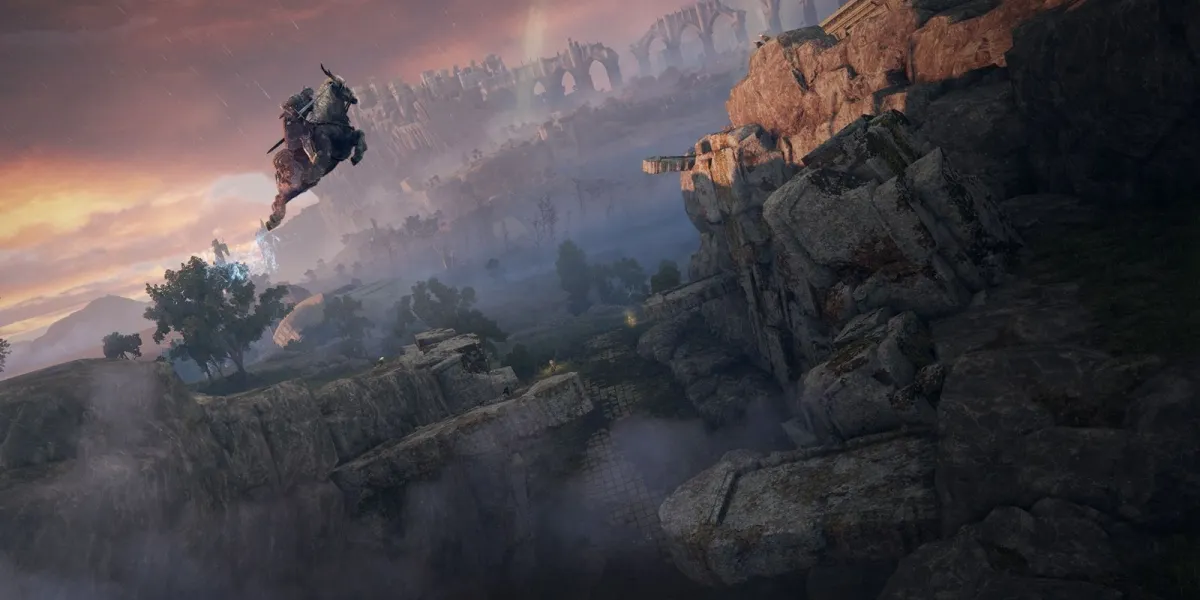 Photo: Elden Ring, via static1.srcdn.com
But when a game's primary value proposition is its world, its characters, or its narrative — when the combat is a delivery mechanism for a story rather than the story itself — locking players out of that experience because they can't master its timing systems feels less like artistic integrity and more like gatekeeping for its own sake.
The best developers seem to understand this instinctively. They build their intended experience first, tune it carefully, and then offer accessibility options as a genuine extension of the design philosophy — not as a disclaimer. Celeste works because the assist mode was built with the same care as the core game. It doesn't break the experience. It reshapes it for a different player.
The Verdict
What it means to "beat" a game has always been more personal than the industry lets on. Finishing a story on assist mode isn't the same as finishing it on the hardest difficulty — but it was never meant to be. Both are real. Both count. The question isn't whether accessibility modes dilute achievement. It's whether we're honest enough to admit that achievement in gaming was always, at least partly, in the eye of the player holding the controller.
In 2026, the studios getting this right are the ones treating accessibility not as a checkbox or a PR talking point, but as a genuine design discipline. The ones getting it wrong are using it as an excuse. Learning to tell the difference is on all of us.