The Hour-15 Problem: Why Players Are Ghosting Games Right Before Things Get Good
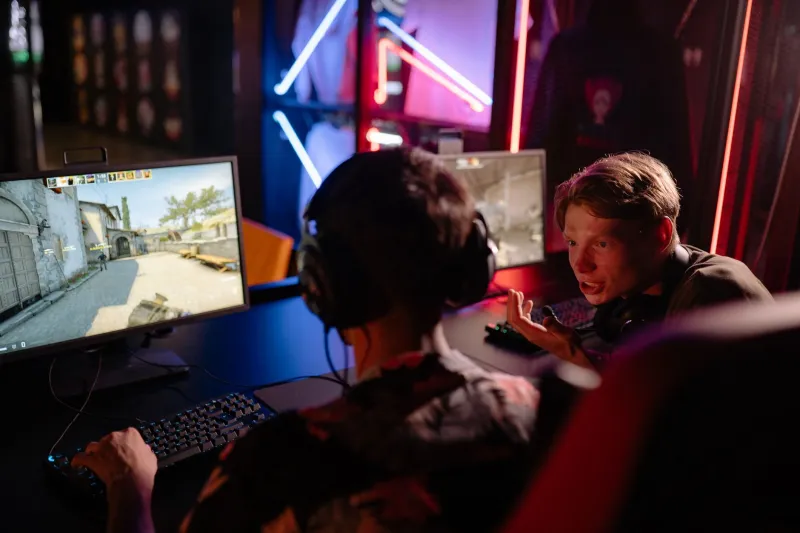
Here's a number worth sitting with: according to various completion rate trackers and trophy data analyses, fewer than half of the players who start most major AAA games ever see the credits roll. For some titles, the figure is considerably lower. And the really interesting part? The dropout doesn't happen at the start, where games notoriously struggle to hold attention. It doesn't happen at the end, where difficulty spikes might be expected to thin the herd. It happens in the middle. Deep in the middle. Right around the point where the game should have fully opened up and started delivering on its promises.
Call it the Hour-15 Problem. It's quiet, it's pervasive, and it's quietly becoming one of the most important design challenges in the industry.
What the Data Actually Says
Platform achievement and trophy systems offer a surprisingly transparent window into player behavior. When a game awards a trophy for completing a specific chapter or reaching a particular milestone, you can see — publicly, in aggregate — exactly how many players made it that far.
The pattern that emerges across major releases is remarkably consistent. Completion rates drop steeply in the first few hours as players who weren't truly invested filter out. They stabilize during the early-to-mid game when the core audience is engaged. And then, somewhere between the 12 and 20 hour mark depending on the game's total length, there's a second significant drop. Not as steep as the opening-hours cliff, but sustained. A slow bleed that continues all the way to the end.
For open-world games in particular, the numbers can be brutal. Major releases in the action-RPG and open-world adventure space routinely see 30 to 40 percent of players failing to reach what the developer considers the story's midpoint. Games that take 60-plus hours to complete can see single-digit completion percentages among their total player base.
This matters for a reason beyond the obvious. Studios spending $150 to $300 million on a game are building toward a finale — a climax, a final boss, an emotional payoff — that a majority of their players will never experience. The marketing budget, the cinematic trailers, the story beats that critics rave about in reviews: a significant portion of the audience is paying full price and checking out before any of it lands.
Why the Middle Is Where Games Go to Die
Understanding the dropout requires understanding what the middle of a game actually is from a design perspective — and why it's structurally the hardest part to get right.
The opening hours of a well-designed game are doing a lot of work simultaneously. New mechanics are being introduced constantly. The world is being revealed. Characters are being established. There's a drip-feed of novelty that keeps the experience feeling fresh even when the underlying systems are simple. The player is in a state of constant discovery.
The final act, similarly, tends to be propulsive. Narrative stakes are at their highest. The pacing tightens. The game is essentially pushing you toward a conclusion, and momentum carries a lot of players across the finish line even when they're fatigued.
The middle has none of those natural advantages. By hour 12 or 15, the player knows the systems. The world has been partially explored. The novelty is gone. What's left is execution — and execution requires the game to have genuine depth beneath its initial appeal. If the combat is only interesting when it's new, the middle is where that becomes apparent. If the open world is only exciting when it's unexplored, the middle is where it starts to feel like a chore.
Open-world fatigue is a specific and well-documented phenomenon. Games that generate excitement through sheer scale — "look at everything you can do" — often hit a wall when players realize that doing all of it is going to take 80 hours, most of which will feel repetitive. The Ubisoft formula, as it's come to be known somewhat uncharitably, is the archetype: a massive map dotted with icons, each representing a variation on a small set of activities. The first 10 hours feel like freedom. Hour 15 feels like a to-do list.
The Studios Getting It Right
But the mid-game slump isn't inevitable. Some recent releases have cracked the problem in ways worth studying.
Hades — and its sequel — essentially eliminated the mid-game by making every run feel structurally distinct. The roguelite format means there's no "middle" in the traditional sense; the game is constantly recombining its elements in ways that maintain freshness across dozens of hours. It's not a solution that works for every genre, but it demonstrates that the slump is a structural problem with a structural solution.
Balatro, one of the breakout hits of recent years, similarly sidesteps the issue through procedural variety. The game's deckbuilding loop generates enough combinatorial novelty that players report finding new synergies well past the point where a traditional card game would have exhausted its surprises.
For narrative-driven games, the approach is different. The best examples tend to introduce a significant structural shift around the hour-12 to 15 mark — a new location, a major character revelation, a mechanical evolution that recontextualizes everything that came before. The Last of Us Part II is a polarizing example of this done aggressively: a mid-game perspective shift that forced players to reconsider everything they thought they understood about the story. It was divisive, but it was never boring. Nobody checked out because nothing was happening.
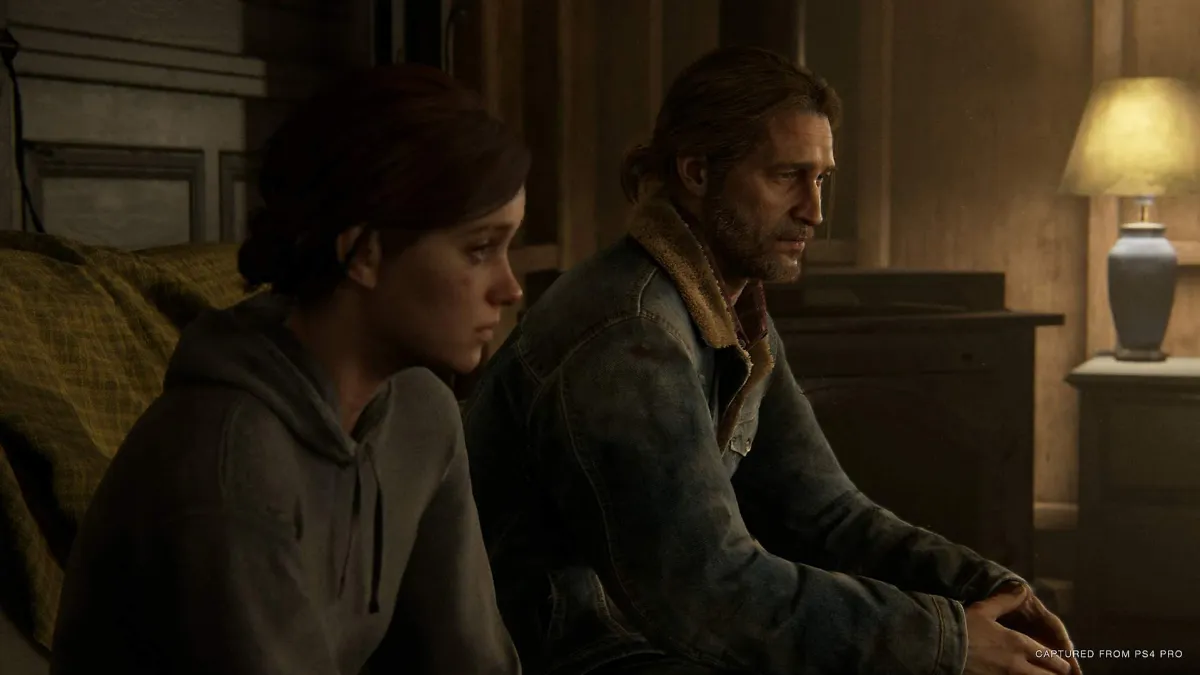 Photo: The Last of Us Part II, via cdn.mos.cms.futurecdn.net
Balanced pacing is the technical term for what these games get right. The introduction of new mechanics, story beats, and environmental variety needs to be distributed across the full length of the experience — not front-loaded into the opening hours to maximize positive first impressions.
What Developers Are Saying in 2026
The conversation about completion rates and mid-game pacing is happening openly in development circles in ways it wasn't five years ago. Studios are increasingly treating completion rate data as a design feedback signal rather than a marketing embarrassment.
Some developers have spoken publicly about building what they call "re-engagement hooks" into the hour-15 to 20 window specifically — designed not as narrative climaxes but as recalibration points that remind players why they started the game. A new weapon type that changes how combat feels. A story beat that reframes the stakes. A new region that contrasts strongly with what came before.
The live-service space has been studying this problem longer than anyone, because player retention is literally the business model. The seasonal content drops, battle pass unlocks, and mid-season events that define games like Fortnite and Destiny 2 are essentially engineered solutions to the engagement cliff. The challenge for single-player developers is adapting those lessons without making linear games feel like they're manufacturing artificial reasons to keep playing.
Why This Matters More Than Ever
As game budgets continue to climb and the release calendar gets more competitive, the mid-game problem is becoming a financial issue as much as a design one. A player who quits at hour 15 is a player who might not buy the sequel. They're a player who tells their friends the game "got boring" rather than recommending it. They're a lost word-of-mouth opportunity in a market where organic advocacy is increasingly valuable.
The studios that figure out how to sustain engagement through the structural middle of a 30-to-60 hour experience — not just at the start, not just at the end — are going to have a meaningful advantage in the years ahead. The ones that keep front-loading their best content and hoping players make it to the good stuff are going to keep watching their completion rates tell a story they don't want to hear.
The final boss is only the payoff if players actually get there. Right now, a lot of them aren't. And the hour-15 wall is exactly where the game is being lost.