Anatomy of a Wall: What Actually Goes Into Designing a Modern Souls-Style Final Boss
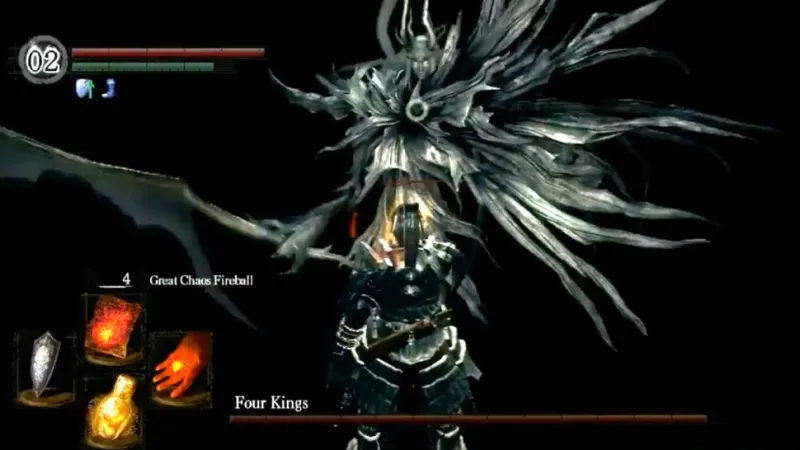
Photo: dark souls boss official, via cdn.mos.cms.futurecdn.net
The final boss of a modern action RPG isn't designed. It's engineered — assembled from animation counts, phase timings, checkpoint spacing, and, increasingly, mountains of player telemetry. The 'wall' you hit fifty hours in isn't an accident. It's a spec sheet.
We dug into developer talks, postmortems, and sourced accounts from across the genre to reverse-engineer how these fights actually get built. Here's what the data and the designers say.
It Starts With a Budget: The Animation Economy
Every boss move is an animation, and every animation is expensive to produce. Postmortems from across the action genre consistently point to the same math: a top-tier boss might ship with 30 to 60 unique attack animations, layered with variants for range, angle, and phase. A final boss routinely costs several times the animation budget of a standard enemy — which is why studios build entire boss encounters around reusing a moveset in new combinations rather than adding new moves.
The craft is in the readability of those animations. Genre-defining designers, most famously Hidetaka Miyazaki in interviews over the years, have talked about telegraphs as a core design language: every lethal attack needs a wind-up the player can learn, even if that wind-up is deliberately short. The modern twist — the delayed attack, the feint, the input-read punish — exists to break the pattern the player has spent fifty hours trusting.
Phases Are Pacing, Not Spectacle
The multi-phase structure isn't there to look cool. It's a pacing tool with a specific job: reset the player's mental model at the exact moment they've solved the fight.
Talks from designers across the genre describe the same rough architecture — a first phase that teaches the core rhythm, a transition that interrupts mastery (new moveset, arena change, or, in the most infamous cases, a full heal), and a final phase that compresses the difficulty into the shortest, sharpest test. The phase transition itself is often tuned for emotional effect: a cutscene, a roar, a silence. You're not just fighting a boss. You're being told the rules just changed.
Checkpoint Placement Is Difficulty Design
Here's the least glamorous and most important lever: the runback. Where you place the last checkpoint relative to the boss door is one of the strongest difficulty knobs a studio controls, and it costs nothing.
Designers have openly discussed this trade-off. A long runback adds pressure and stakes to every attempt — and inflates effective difficulty without touching a single stat. A fog gate next to the bonfire says we want you iterating on the fight, not the walk. Modern endurance bosses increasingly trend toward the latter, a quiet concession to an audience that measures respect in minutes, not deaths.
Telemetry Tuning: The Wall Is Measured
This is the part that would've been impossible a decade ago. Studios now ship bosses into betas and day-one telemetry streams and watch, in aggregate, exactly where players break.
Sourced accounts from live-action-RPG teams describe dashboards tracking attempt counts per phase, quit points, build distribution, and time-to-clear. If the median player needs 40 attempts and the target was 15, something gets patched — an opening added to a combo, a punish window extended by a few frames. The 'wall' is engineered, but it's also calibrated against real behavior, which is why difficulty in modern releases increasingly gets tuned post-launch in public (see: every patch-note controversy of the last three years).
The designers who talk about this publicly tend to land on the same line: the goal isn't fairness or cruelty. It's a specific feeling — the boss should feel impossible right up until the attempt where it isn't.
The Wall, On Purpose
Put it all together and the modern souls-style final boss looks less like art and more like architecture: an animation budget, a phase script, a checkpoint decision, and a telemetry loop, all pointed at producing one specific emotional outcome — the sense that you beat something that was built, deliberately, to beat you.
Verdict: The next time you finally drop that final boss on attempt 47, know that somewhere a designer saw that number coming — and built the fight so you'd earn it anyway.