Every Era Gets the Boss It Deserves: A Generation-by-Generation History of Gaming's Signature Showdowns
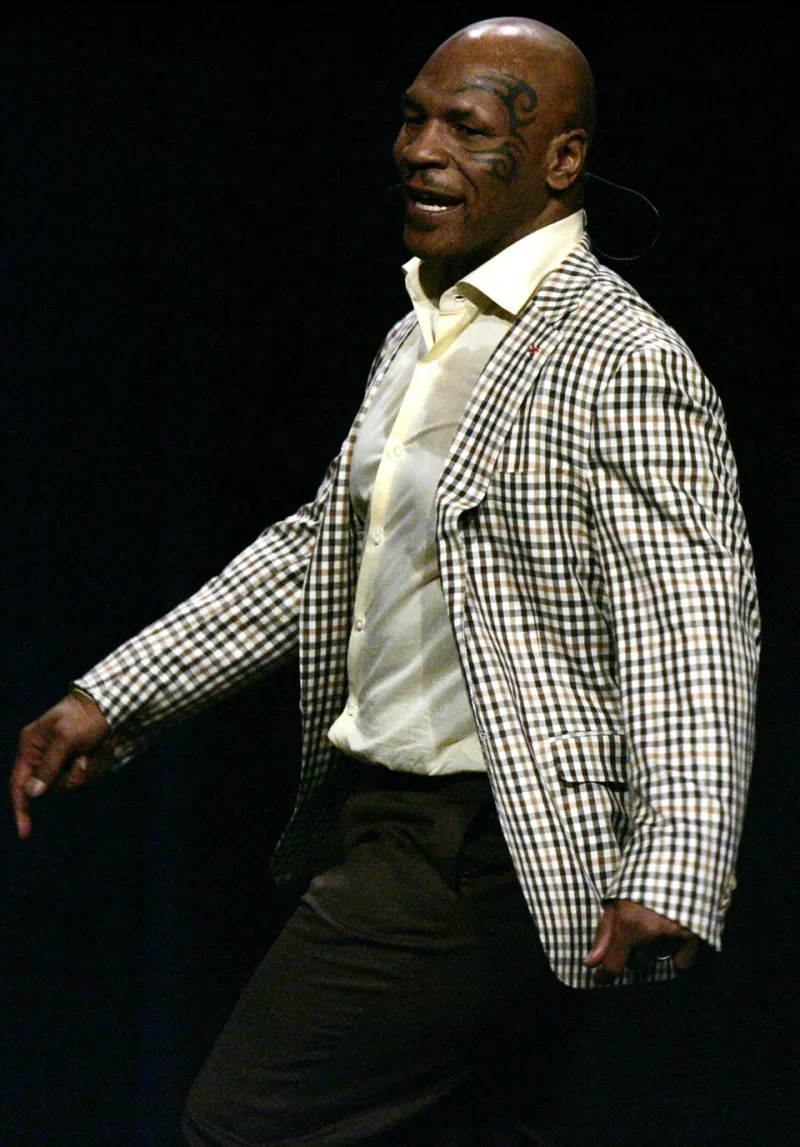
Photo: Eva Rinaldi, CC BY-SA 2.0, via Wikimedia Commons
Every gaming generation has one. Not the best boss, necessarily — the defining one. The fight that gets name-dropped in Discord servers by people who weren't alive when it shipped. The fight that shows up in a Super Bowl ad thirty years later. The fight that, fair or not, becomes shorthand for an entire era of design.
So let's take the long view. One signature boss per generation, 1985 to now, and what each one quietly tells us about the hardware in the box and the people holding the controller.
The NES Era: Mike Tyson (1987)
Mike Tyson's Punch-Out!! gave America a final boss drawn from real life, and that's what made him terrifying. Tyson wasn't a dragon or a wizard — he was a heavyweight champion who could flatten you in one punch, and for a generation of kids in the late '80s, he was the first boss that felt genuinely unfair.
Here's the thing, though: he wasn't unfair. He was readable. Every one of his knockout swings came with a tell — a blink, a grunt, a half-second of warning. The NES couldn't render spectacle, so Nintendo and the team at the studio behind the port built difficulty out of timing. That's the era's whole thesis: when the hardware is limited, precision is your spectacle.
The SNES/Genesis Era: Sephiroth (1997)
The 16-bit-to-32-bit transition gave us bosses with scale, cinematics, and — critically — emotional stakes. Sephiroth in Final Fantasy VII wasn't just a stat block; he was a story you'd been chasing for eighty hours, and the One-Winged Angel theme turned the final confrontation into an event.
What Sephiroth tells us about the era: RPGs had gone mainstream in the US, and players now expected bosses to mean something. The fight itself is honestly beatable by a reasonably prepared party — the legend is narrative, not mechanical. Hardware had caught up to drama, and drama sold.
The PS2/GameCube Era: Sora's Cluster and the Rise of the Optional Wall
If we're picking one, it's hard not to point at the optional superboss boom this era perfected — the Lingering Will-style fights that gated nothing but bragging rights. The PS2 could handle long, multi-phase, pattern-dense encounters, and developers responded by building bosses for the 1% who'd ever see them.
The cultural signal: difficulty became optional content. You didn't have to fight these things. That choice — the opt-in wall — would define the next two decades.
The Xbox 360/PS3 Era: The Era of the Prepared Fight
HD gaming brought achievement culture, and with it, bosses designed to be clipped, uploaded, and bragged about. This is when boss design started accounting for an audience of millions watching through a camera. Fights got legible — big tells, big phases, big moments — because now every kill was content.
The Modern Era: Malenia, Blade of Miquella (2022)
And then there's the current standard-bearer. Malenia isn't a final boss; she's an optional one, tucked into Elden Ring's sprawling open world, and she became bigger than anything she gates. Two health bars. A heal-on-hit mechanic that punishes the defensive play most players learned over twenty years of the genre. A phase transition that resets the fight's rhythm entirely.
What Malenia tells us about now: difficulty is a marketing category. Her name trended on launch weekend. Streamers built careers on beating her. From the open-world design side, she's a spike in a game otherwise built around choice — proof that modern audiences will accept brutal difficulty if it's framed as a discovery rather than a requirement.
So What's the Pattern?
Look across the lineage and one thread runs through all of it: every signature boss is a negotiation between what the hardware can do and what the audience will tolerate. Tyson's tells existed because pixels couldn't do spectacle. Sephiroth's legend exists because discs finally could. Malenia's infamy exists because an open world let players walk into her at any level, any time, unprepared.
And the next one? Whatever it is, it'll be clipped, memed, and beaten by a no-hit runner within 72 hours of launch. The boss hasn't changed. The audience watching us fight it has.
Verdict: Worth watching — because whoever designs the next generation's signature boss is already reading every one of these fights for a blueprint.