Boss Dropped: The Sequels That Abandoned What Made Their Predecessors Legendary
Photo: Skimel, CC BY-SA 4.0, via Wikimedia Commons
There's a specific kind of disappointment that only gaming can produce. It's not the disappointment of a bad game — that's just a bad game. It's the disappointment of a sequel that looked at the thing you loved most about its predecessor, decided it was too risky, too hard, or too alienating to a broader audience, and quietly sanded it down into something safer. The boss fights that once felt like a genuine reckoning — multi-phase encounters that demanded mastery, punished complacency, and rewarded the player who had actually been paying attention — replaced by spectacle-driven setpieces that look incredible in a trailer and feel hollow at the controller.
This is a piece about those sequels. The ones that forgot what made you fall in love in the first place.
Why Studios Keep Making This Mistake
Before we get into specific examples, it's worth understanding the structural pressures that push developers toward softening their boss encounters in follow-up titles. The first game in a franchise is usually built by a small, passionate team with something to prove and relatively modest commercial expectations. The sequel arrives with a larger budget, a larger team, publisher pressure to expand the audience, and a marketing department that has studied the reviews and noticed that some people called the original "too hard" or "inaccessible."
The response to that feedback is almost always the same: smooth the edges. Reduce the phase complexity. Add more mid-fight checkpoints. Turn the camera toward the spectacle and away from the mechanics. Make it easier to feel like you're winning without necessarily being good. This isn't cynical, exactly — it's a rational response to commercial incentives. But the cumulative effect is a genre that gradually loses the thing that made it worth playing in the first place.
Dragon Age: The Veilguard and the Architect Forgotten
Few franchise pivots in recent memory generated as much discourse as BioWare's approach to Dragon Age: The Veilguard. The original Dragon Age: Origins — released in 2009 and still discussed reverently by a certain generation of RPG players — featured an Archdemon encounter that was a genuine strategic test. It demanded party composition awareness, positioning, and tactical resource management. It was hard in the way that felt right for the franchise: demanding but learnable.
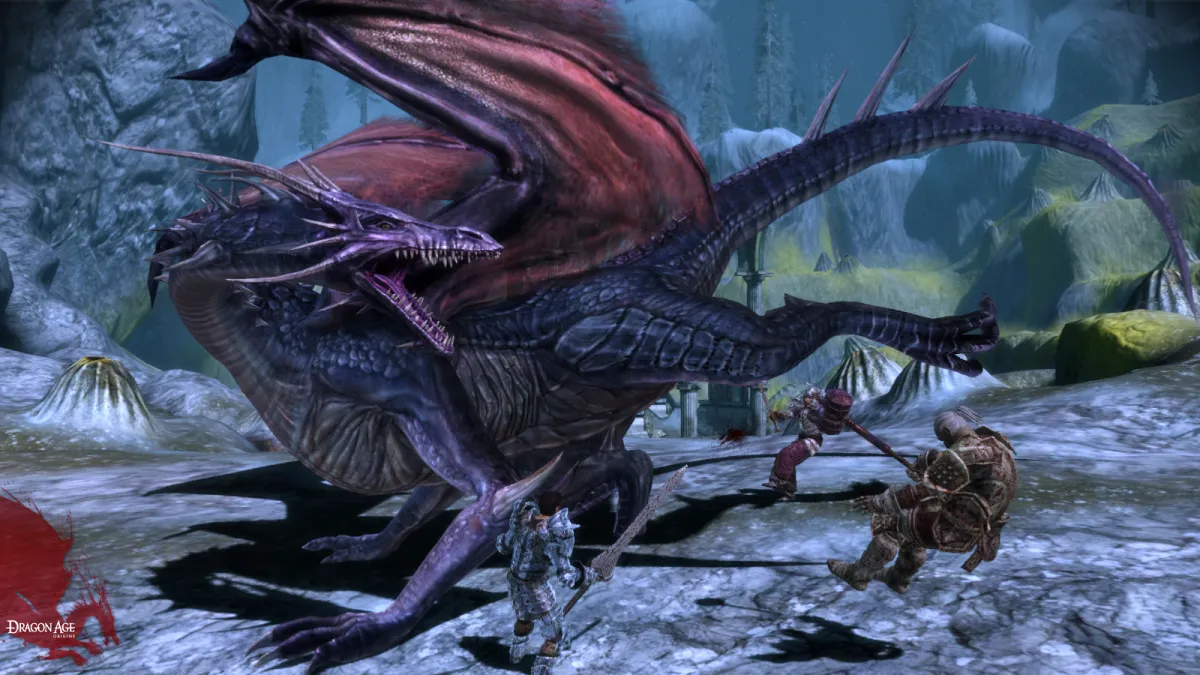 Photo: Dragon Age: Origins, via gameusagi.com
By the time The Veilguard arrived, BioWare had retooled Dragon Age into an action-RPG with a dramatically simplified combat system. The final encounters in Veilguard are visually striking — but the mechanical depth that made Origins' climax feel earned is largely absent. The bosses are more about surviving a spectacle than solving a puzzle. Fans who had been with the franchise since the beginning noticed immediately, and the discourse around the game's combat philosophy became one of the defining conversations of its launch window. Whether that trade-off was worth the broader audience it reportedly attracted is a question BioWare is still answering.
Devil May Cry 2: The Warning Sign Nobody Heeded Enough
If you want a case study in what happens when a sequel overcorrects on difficulty, look no further than Devil May Cry 2. The original DMC was a genre-defining action game built around stylish, demanding combat that rewarded players who mastered its systems — and its boss encounters were the apex of that philosophy. Nelo Angelo, Mundus — these were fights that asked something of you.
 Photo: Devil May Cry 2, via support.microsoft.com
Devil May Cry 2 arrived in 2003 and promptly made almost every boss trivially easy. Dante's combat abilities were so overpowered relative to the enemy design that most encounters — including the final boss — could be handled by pointing a gun in the general direction of the enemy and holding the trigger. The sequel had looked at the original's reputation for challenge and decided the solution was to give the player so much power that challenge became irrelevant. The result was critically panned and is still widely considered one of the most baffling franchise missteps in action game history. DMC3 course-corrected spectacularly, but the lesson — that removing challenge removes meaning — had to be learned the hard way.
Halo 5: Guardians and the Warden Problem
Halo 5: Guardians is a complicated game to evaluate, and its campaign's reception was genuinely divisive. But one specific critique emerged consistently from players who had grown up with the franchise: the boss encounters, particularly the repeated Warden Eternal fights, felt like a design philosophy in conflict with itself. The Warden is a damage-sponge with a large health pool and a handful of attack patterns — and you fight him multiple times across the campaign, with the fights feeling more like mandatory endurance tests than climactic confrontations.
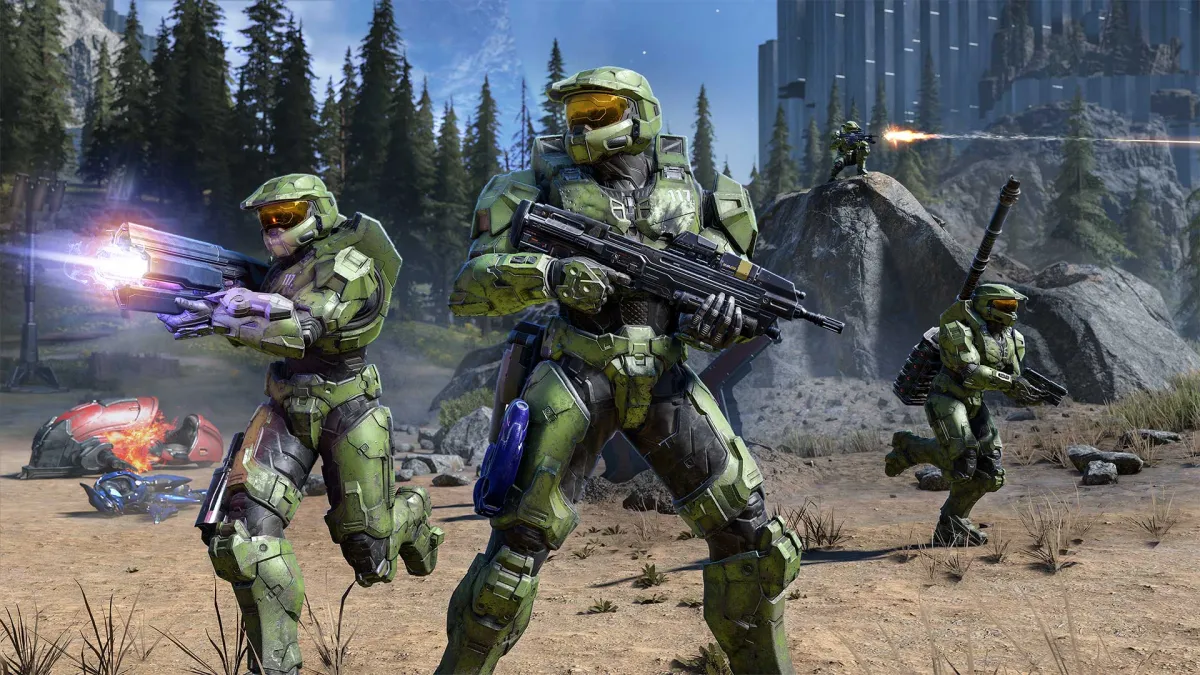 Photo: Halo 5: Guardians, via wpassets.halowaypoint.com
Compare this to the Halo 3 campaign's approach to its final act, where the encounter design built toward a conclusion that felt genuinely earned. The Halo 5 encounters weren't badly designed in isolation — but stacked against what the franchise had produced before, they felt like a step toward quantity over quality. The spectacle was present. The craft felt diluted.
Sekiro's Shadow: When FromSoftware Almost Forgot the Assignment
This one requires nuance, because FromSoftware is generally the studio held up as the gold standard for boss design in the modern era. But even within their catalog, there are moments where the formula wobbled. Certain bosses in Elden Ring's expansion content — and this is a view held by a meaningful segment of the community rather than a universal verdict — pushed phase complexity and input-reading aggression to a point where the challenge felt less like a fair test and more like statistical attrition. The line between 'brutally demanding' and 'unfair' is thin, and the argument that some of the DLC bosses crossed it is not an unreasonable one.
This isn't a failure of the same magnitude as the other examples here — FromSoftware's baseline is so high that their stumbles are relative. But it's a useful reminder that overcorrection works in both directions. Adding too much phase complexity and aggression can be just as damaging to the boss encounter experience as removing it.
The Pattern and the Problem
Look across these examples and a pattern emerges. The sequels that disappoint in their boss design almost always do so for one of two reasons: they made things too easy in pursuit of a broader audience, or they made things too complicated in pursuit of spectacle. Both failures stem from the same root cause — the development team stopped asking 'what does the player need to feel from this encounter?' and started asking 'what does this encounter need to look like?'
The best boss fights in gaming history — the ones that get remembered, theorycrafted, and returned to years later — are built around the player's emotional arc, not the visual one. They're hard because the difficulty means something. They're complex because the complexity is in service of a payoff. When a sequel forgets that, it doesn't matter how good the graphics are or how dramatic the music is. You can feel the absence of craft at the controller.
What Comes Next
The good news is that the market is increasingly capable of rewarding studios that get this right. The roguelite and soulslike genres — both of which treat the boss encounter as sacred — are among the most commercially successful categories in gaming right now. Players are voting with their wallets for challenge, for mechanical depth, for encounters that ask something of them.
The studios that are paying attention to that signal, rather than the one that says 'make it accessible,' are the ones building the franchises that people will still be talking about in a decade. The ones that aren't are producing sequels that will end up on lists exactly like this one.
The boss fight is a promise. Break it once and players remember forever.