Hunting Nothing: Inside the Communities Chasing Video Game Bosses That Were Never Actually There
Photo: Nintendo Spike Chunsoft The Pokémon Company, Public domain, via Wikimedia Commons
Somewhere in the desert of San Andreas, Bigfoot is waiting. He's been waiting for over twenty years. Players have combed every grove of trees, every shadowed canyon, every foggy hillside in Grand Theft Auto: San Andreas looking for him. Rockstar never confirmed he existed. The evidence — blurry screenshots, secondhand stories, a friend of a friend who saw something move in the dark — has never amounted to a single verified sighting. And yet the hunt continues. New players discover the legend every year. New theories emerge. New expeditions set out.
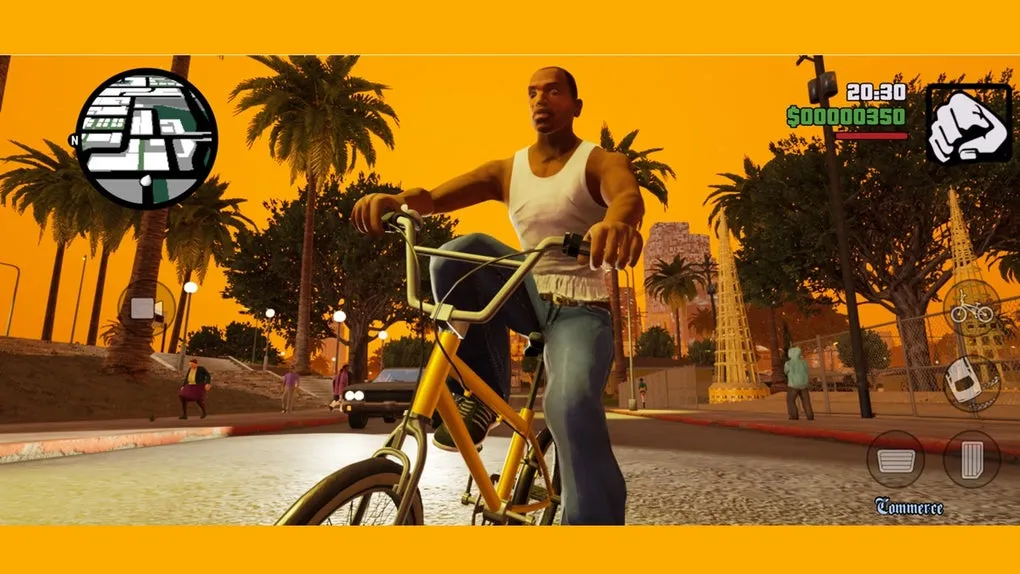 Photo: San Andreas, via images.sftcdn.net
Bigfoot in San Andreas is maybe the purest expression of a phenomenon that has quietly become one of gaming's most fascinating subcultures: communities built entirely around searching for things that, by all available evidence, aren't there. Secret bosses. Cut encounters. Hidden endings. Mythological enemies buried so deep in the code that no one has ever found them — possibly because they don't exist, possibly because they're waiting for the right conditions, possibly because a developer planted a rumor twenty years ago and never looked back.
These communities are real, they are dedicated, and they are, in their own strange way, doing something genuinely interesting.
The Original Ghost Hunt
The Bigfoot myth in San Andreas is instructive because it was almost certainly manufactured by the players themselves. The game launched in 2004 with a dense, atmospheric world that felt alive in ways players hadn't experienced before. Forests rustled. Animals moved at the edges of vision. The game's lighting engine produced shadows that played tricks on the eye. In that environment, the human brain — pattern-seeking, narrative-hungry — started filling in gaps.
Someone saw something. Someone told someone else. A forum post became a thread became a legend. Rockstar, characteristically, said nothing, which in the absence of a denial functions almost identically to a confirmation. The community did the rest.
What makes the San Andreas case remarkable is that it eventually produced its own resolution — of a kind. Years of datamining revealed no Bigfoot assets in the original game. But GTA V quietly included a Bigfoot mission, and San Andreas received a mobile update in 2015 that added an actual Bigfoot encounter. The developers, it seems, had been watching the community hunt for a decade — and decided to reward the myth rather than debunk it.
This is the first important thing to understand about ghost bosses: sometimes the developers know exactly what they're doing.
The Modern ARG and the Blurred Line
The San Andreas model — organic myth, developer silence, eventual acknowledgment — has evolved into something more deliberately constructed in the modern era. ARGs, or Alternate Reality Games, have become a standard tool in the marketing arsenal of major publishers, and they operate on exactly the same psychological fuel as the Bigfoot hunt: the thrill of collective discovery, the hunger for hidden meaning, the sense that the game is communicating something just beyond reach.
Hideo Kojima is perhaps the master practitioner of this art. The marketing campaign for Metal Gear Solid V included a fake studio, a fake director, and a months-long community effort to decode trailers that were themselves designed to be decoded. The line between developer tease and community delusion was never fully drawn, and Kojima didn't draw it. He watched the forums light up and called it a success.
 Photo: Hideo Kojima, via youre.outof.games
More recently, Elden Ring's community has become a case study in productive ghost-hunting. The discovery of Miquella's Needle, the Frenzied Flame ending, and the apparent incompleteness of certain questlines sent players into the code looking for content that might have been cut or hidden. Some of it was genuinely there. Some of it wasn't. The community couldn't always tell the difference — and FromSoftware's habitual silence on the subject meant the uncertainty became part of the game's identity.
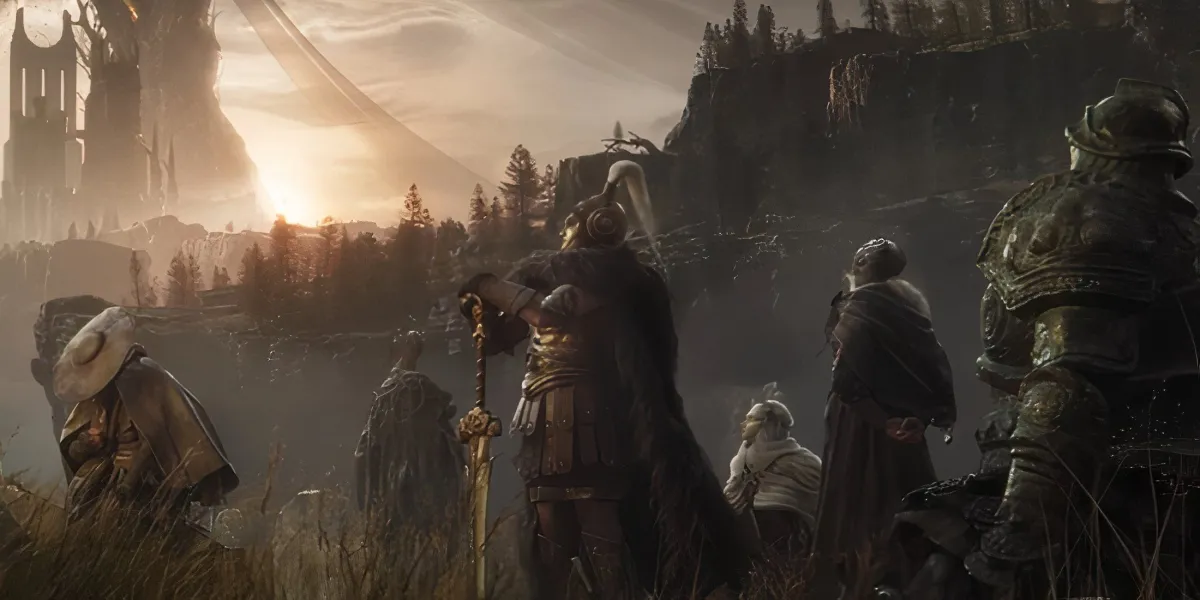 Photo: Elden Ring, via static0.gamerantimages.com
What Drives the Hunt
Talk to anyone who's spent serious time in one of these communities and a few consistent themes emerge. There's the obvious appeal of discovery — the dopamine hit of finding something no one else has found. But underneath that is something more interesting: a desire for the game to be more than it is. A secret boss isn't just a secret boss. It's proof that the world has depth the developers didn't advertise. It's evidence that there are still frontiers.
For players who grew up in the era of gaming magazines and playground rumors — before the internet made every secret findable within hours of launch — ghost hunting is also a form of nostalgia. The Mew-under-the-truck myth in Pokémon Red and Blue was the defining gaming urban legend of a generation. It was completely false. It didn't matter. What it created was a shared experience of believing, of trying, of wanting the world to contain more magic than it did.
That feeling doesn't die when you grow up. It goes looking for new myths to believe in.
When the Hunt Becomes the Game
The most interesting development in recent years is communities that have become self-aware about the process — that understand they might be chasing nothing, and have decided that the chase itself is the point.
The Dark Souls community's multi-year hunt for the Pendant starting item is a perfect example. Game director Hidetaka Miyazaki famously trolled players by suggesting the Pendant had a hidden use that no one had discovered. Years of testing, theorizing, and coordinated experiments followed. Eventually Miyazaki revealed it was a joke — the Pendant did nothing. The community's response was, largely, delight. They had built something real — friendships, shared knowledge, a documented history of collective problem-solving — out of a search for something that didn't exist.
The Minecraft community did something similar with Herobrine, a mythological corrupted version of the default player skin rumored to haunt worlds and stalk players. Mojang played along for years, including fake "Removed Herobrine" patch notes in every major update. The myth was entirely fictional. The community that formed around it was entirely real.
The Ethics of the Tease
Not everyone finds this dynamic charming. Critics argue that developers who deliberately fuel speculation — through cryptic tweets, unexplained in-game anomalies, or strategically ambiguous statements — are exploiting player trust for engagement metrics. When a community spends months hunting for content that was never there, and the developer knew it was never there, is that a fun game or a cynical manipulation?
The answer probably depends on how it ends. When Rockstar eventually gave San Andreas its Bigfoot, the years of hunting felt retroactively validated. When a community burns out chasing an ARG that turns out to be a marketing stunt for a mediocre game, the feeling is closer to betrayal.
The best ghost hunts are the ones where the developers respect the community enough to eventually give them something — even if that something is just an honest answer.
The Unfindable as Feature
Here's the thing that the gaming industry hasn't fully reckoned with: the communities that form around ghost bosses and secret hunts are some of the most engaged, most passionate, most creative player communities in existence. They produce wikis, videos, podcasts, and friendships. They keep games alive years or decades past their commercial relevance. They are, in their own strange way, a form of free marketing that no budget can reliably produce.
The boss that wasn't there might be the most powerful boss in gaming. It doesn't need a health bar. It doesn't need attack patterns. It just needs to be rumored, and the players will do the rest.
In the end, the greatest secret boss in gaming history might be the community that formed while looking for it.