Show Me the Value: A Brutally Honest Look at Which $70 Games Actually Earn Their Price Tag

Let's not dance around it. Seventy dollars is a lot of money. That's a tank of gas, a decent dinner out, or roughly three months of a streaming subscription. And yet, somewhere between the PlayStation 5 launch in 2020 and today, $70 became the new normal for AAA video games — a price hike that publishers justified with rising development costs and inflation, and that most consumers accepted with a quiet, defeated exhale. Now, in 2026, with deluxe editions routinely cresting $100 and season passes tacking on another $30 to $50, the question every US gamer should be asking isn't just can I afford this? It's is this actually worth it?
The answer, depending on which game you're talking about, is either a resounding yes or an embarrassing no.
What Does $70 Actually Buy You?
Before we start naming names, it helps to establish a framework. What should $70 get you in 2026? Here's a reasonable consumer baseline: a complete, polished experience at launch with no critical content gated behind a paywall, meaningful replay value or a campaign long enough to justify the price per hour, and some form of post-launch support that doesn't feel like a shakedown. That's not a high bar. But you'd be surprised how many games miss it.
The traditional metric — hours of content divided by price — is imperfect but still useful as a starting point. At $70, you're paying roughly $3.50 per hour if a game runs 20 hours. That's competitive with a movie ticket for a fraction of the runtime. Push that to 40 or 60 hours and the value proposition starts looking genuinely strong. The problem is that raw hours don't account for quality. Padding a game with fetch quests and repetitive open-world busywork inflates the clock without inflating the experience.
The Case For: Games That Earn Every Dollar
Let's give credit where it's due. Certain releases in the 2025-2026 window have genuinely delivered. Games that launch in a complete state, offer deep mechanical systems that reward mastery, and include boss encounters that actually test what you've learned — these are the titles that make $70 feel like a fair exchange.
The gold standard here is a game that respects your time and your skill ceiling simultaneously. Think about what it means when a final boss encounter feels like a legitimate exam — every mechanic you've been trained on gets called up at once, the difficulty curve has been honest with you the whole way, and winning feels earned. That design philosophy doesn't come cheap. It requires iteration, playtesting, and a development culture that prioritizes craft over quarterly targets. When a studio pulls it off, the $70 ask feels almost modest.
Replay value is the other major multiplier. A 25-hour game with a New Game Plus mode, branching difficulty tiers, and a boss rush unlockable after credits is functionally a better value than a 50-hour game you'll never touch again. The best releases understand this — they're designed to be revisited, theorycrafted, and speedrun. That longevity is worth paying for.
The Case Against: When $70 Is Just Audacity
Now for the uncomfortable part. A troubling number of recent AAA releases have launched at full price in states that would have been considered unacceptable in the disc era. Day-one patches that weigh in at 20-plus gigabytes. Core story content locked behind a $30 season pass that was clearly developed alongside the base game. Multiplayer modes stripped out and resold as separate products. Boss encounters that are essentially extended cutscenes — spectacular to watch, trivial to survive — padded out to mask the fact that the underlying game is shorter than it has any right to be at this price point.
The deluxe edition arms race deserves particular scrutiny. The standard $70 version, the $90 deluxe with three days of early access and a cosmetic pack, and the $110 ultimate edition with the season pass included — this tiering isn't consumer-friendly pricing. It's psychological pressure dressed up as choice. And when the "early access" tier is the only way to play a game before reviewers have published scores, that's not a premium feature. That's a review-score buffer.
The Game Pass and PS Plus Factor
Any honest conversation about game pricing in 2026 has to acknowledge the subscription layer sitting underneath all of this. If a $70 game launches day one on Xbox Game Pass, the calculus changes entirely for subscribers — and publishers know it. The growing tension between day-one subscription inclusion and premium pricing is one of the defining business stories in the industry right now. For consumers, the practical advice is straightforward: if a game you're eyeing has any chance of hitting Game Pass or PS Plus within 90 days, patience is a legitimate strategy.
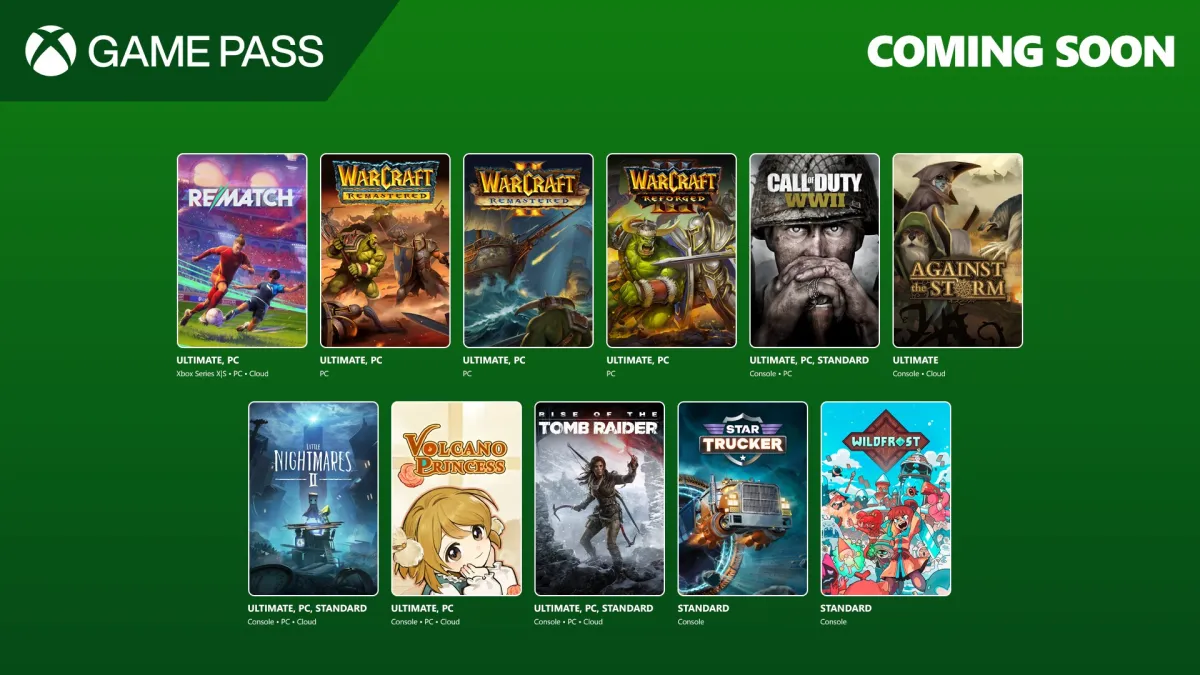 Photo: Xbox Game Pass, via xboxwire.thesourcemediaassets.com
That said, not everything lands on a subscription service, and waiting six months for a price drop isn't always viable when the cultural conversation is happening right now. There's real value in playing a game when your friends are playing it, when the community is alive, when the discourse is fresh. That social dimension is part of what you're buying at $70 on launch day — and for the right game, it's worth it.
The Boss Fight Test
Here's an unconventional but genuinely useful heuristic: judge a game's value by the quality of its final boss encounter. Not the spectacle of it — the design of it. A developer that builds a final confrontation with multiple distinct phases, mechanical callbacks to earlier systems, and a difficulty curve that feels fair but demanding is a studio that cares about the complete experience. That level of craft tends to correlate with overall game quality in ways that trailers and review scores sometimes don't capture.
Conversely, a final boss that's a glorified QTE sequence or a damage-sponge with no interesting mechanics is a signal. It tells you that somewhere in development, the priority shifted away from player experience and toward shipping on time. That game might still be worth playing — but probably not at $70 on day one.
The Verdict
The $70 price point isn't inherently wrong. Games are more expensive to make than ever, development teams are larger, and the production values on the best releases are genuinely staggering. But the price is only justified when the product is complete, crafted with care, and built to last beyond a single weekend playthrough. The studios that understand this — the ones that treat the final boss as a promise to the player rather than a checkbox — are the ones earning your money. Everyone else is banking on the hype cycle carrying them through opening weekend before the refund window closes.
Spend accordingly.