Stop Right There: Why Game Developers Are Quietly Terrified of Letting You Roam Free Too Soon

There's a moment every open-world player knows intimately. You spot a mountain range on the horizon, a glittering coastline just past the tutorial zone, or a city skyline that looks close enough to touch — and you think, what if I just go there right now? Then comes the invisible wall. Or the chest-high rock that your superhuman protagonist somehow cannot climb. Or the NPC who materializes from nowhere to say, "You shouldn't go that way yet." The illusion shatters. The world, it turns out, isn't a world at all. It's a corridor wearing a very convincing mask.
Artificial barriers in games are as old as game design itself, but in the era of massive open-world titles — where the marketing promise is almost always limitless exploration — they've become one of the most quietly contentious fault lines between developers and players. And the tension is only growing.
The Architecture of Restriction
Designers have a polite term for this stuff: soft gating. The idea is to guide players through a curated experience without making them feel imprisoned. In practice, it produces some of gaming's most absurd moments. In the original Red Dead Redemption, invisible death fences surrounded the map borders, killing your horse mid-gallop with zero explanation. The Witcher 3 — celebrated as one of the freest open worlds ever made — still corrals players away from Skellige early on through level-scaled enemies that will one-shot you if you wander too far from White Orchard. Even Elden Ring, a game practically built around the philosophy of letting players get destroyed by content they weren't supposed to reach yet, uses invisible force fields to block certain areas before story triggers fire.
The methods are varied and sometimes creative. Developers lean on environmental storytelling — a collapsed bridge here, a flooded road there — to justify barriers that are really about load times, scripted sequences, or simply the fact that the content beyond the gate isn't finished yet. Others go more blunt: Cyberpunk 2077 launched with a police system so underdeveloped that the game actively discouraged players from engaging with it by making wanted levels comically punishing. The restricted zone wasn't marked on any map. Players just learned, through trial and error, that Night City had invisible rules.
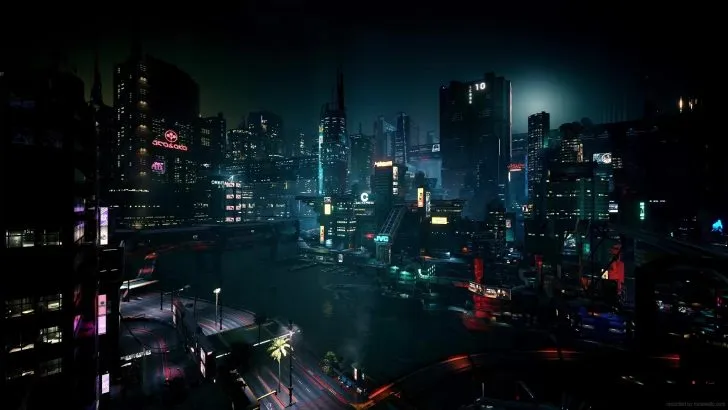 Photo: Night City, via moewalls.com
Why Studios Can't Just Let Go
It would be easy to frame this as laziness or contempt for players, but the reality is more complicated. Game development is a discipline built on controlled chaos. Narrative designers spend months constructing emotional arcs that depend on players experiencing events in a specific sequence. If you reach the villain's lair before the game has established why you hate the villain, the climax lands with all the emotional weight of a wet paper bag.
There's also a technical dimension that rarely gets discussed in player-facing conversations. Open-world games are extraordinary feats of asset streaming, memory management, and procedural population. Letting players sprint into an unloaded zone doesn't just break immersion — it can crash the whole experience. The boulder blocking your path to the next region might be there because the region's assets haven't been streamed into memory yet.
But here's where studios often miscalculate: players are smarter than the barriers give them credit for. The Dark Souls community didn't just accept the fog gates — they built entire wikis around understanding what lay beyond them, theorizing, preparing, and celebrating the moment the gate finally opened. The restriction became part of the mythology. Compare that to Assassin's Creed Odyssey, where a literal glowing red border surrounded the playable map and killed you for crossing it, and you understand why one approach builds community while the other breeds resentment.
The Backlash Is Getting Louder
On Reddit, YouTube, and across gaming forums, players have started cataloging artificial barriers the way birdwatchers catalog species — with a mixture of amusement and genuine frustration. Videos titled "Breaking [Game X] in 10 Minutes" routinely rack up millions of views, and the content is almost always the same: a player gleefully bypassing an invisible wall to reveal the empty, unfinished, or surprisingly complete world the developer didn't want them to see yet.
The Hogwarts Legacy community spent weeks after launch mapping every locked door in the castle, convinced that content was being withheld for DLC. Some of it was. The Starfield discourse around its loading-screen-heavy structure became a referendum on whether Bethesda had fundamentally broken the promise of open-world exploration by replacing seamless travel with menu navigation. Players weren't just annoyed — they felt lied to.
The most pointed criticism isn't about the barriers themselves. It's about the condescension embedded in them. When a game treats players like children who need to be stopped from running into traffic, it communicates a fundamental distrust of the audience. And modern players, raised on speedrunning culture and community-driven discovery, have very little patience for being patronized.
The Studios Getting It Right
The counterexample that comes up constantly in these conversations is The Legend of Zelda: Breath of the Wild — and its successor, Tears of the Kingdom. Nintendo's radical design choice was to make the barriers physical and logical rather than invisible and arbitrary. You can go to Hyrule Castle immediately. The game won't stop you. But the world's own systems — weather, enemy difficulty, equipment degradation — will. The restriction is authored by the simulation itself, not by a programmer's invisible hand.
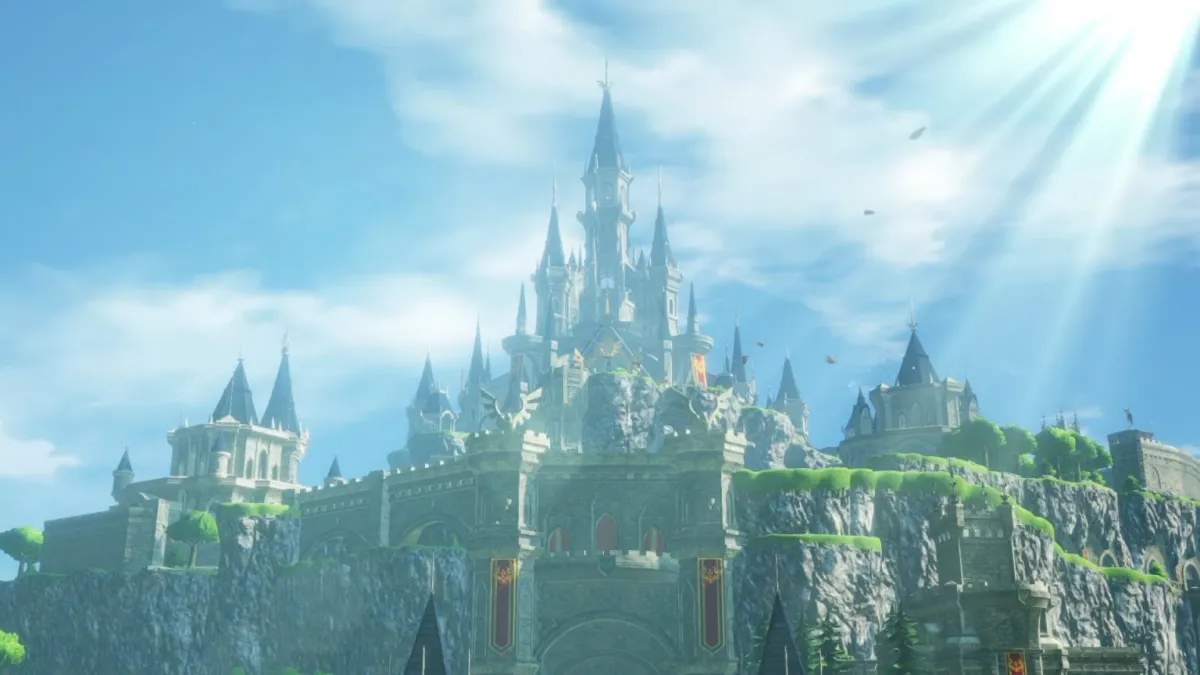 Photo: Hyrule Castle, via tigagame.com
More recently, Baldur's Gate 3 achieved something similar in a different genre. Larian Studios built a game where sequence-breaking isn't just possible — it's sometimes the intended experience. Players who rushed to Act 3 before completing Act 1 content found a richer, stranger story, not a broken one. The studio designed for exploration rather than against it.
The lesson isn't that barriers are always wrong. It's that the best barriers are the ones players never notice — because they're woven into the world's own logic rather than bolted on top of it as an afterthought.
Where This Goes Next
As game budgets balloon and development timelines stretch to a decade or more, the pressure on studios to control the player experience will only intensify. But the playerbase is evolving just as fast. Communities form around finding the seams. Speedrunners make careers out of exposing the scaffolding. And every time a developer underestimates that curiosity, the backlash arrives swiftly and loudly.
The invisible wall isn't going anywhere. But the days of players quietly accepting it are long gone. The best studios already know this — and the ones that don't are about to find out the hard way.
The most memorable open worlds don't restrict your freedom — they make you earn it.